
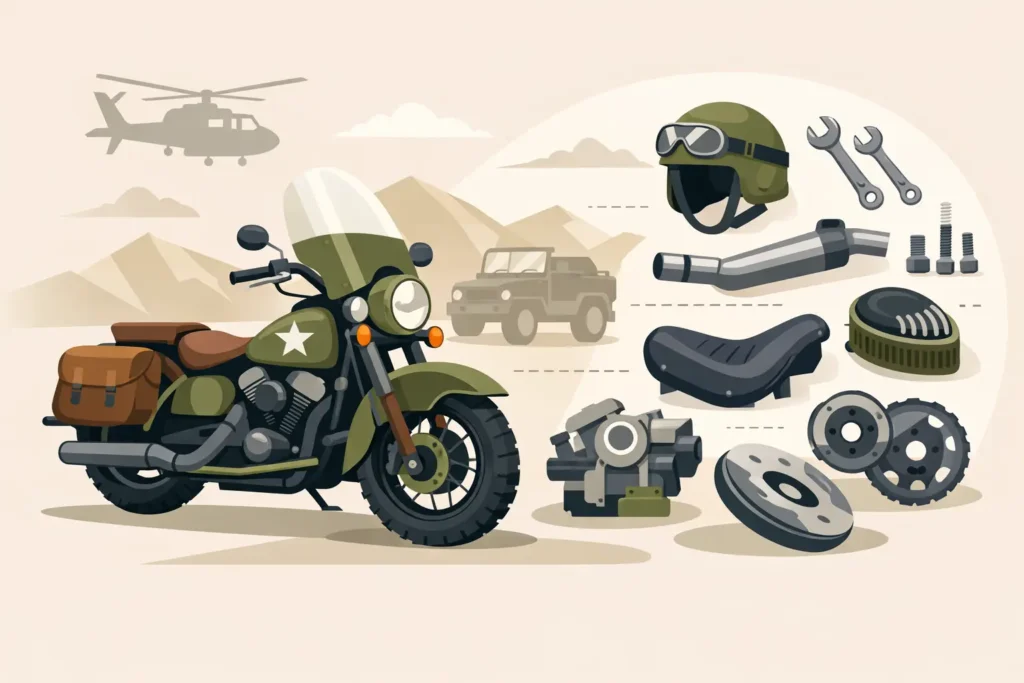
A military Harley can look like a simple old 45, right up until the wrong light bucket, civilian fender, or late-model fastener turns a serious restoration into a parts-bin special. Harley military motorcycle parts are not just about finding olive-drab pieces. The real job is matching the part to the motorcycle’s production era, military configuration, and intended use – museum-correct display, judged restoration, parade bike, or a machine built to be ridden. harley military motorcycle parts Heated RoadSofa Seat Backrest Black Stitching Harley Touring Bagger 1997-2007 FL
For builders chasing a World War II-era WLA, the details carry the weight. A correct part can preserve history and add value. A usable replacement can keep a rider on the road. Both are valid choices, but they are not always the same choice. Know which one you are building before money starts leaving the garage. Black spoke wheel for Harley Davidson
Know Which Military Harley You Are Working On
Most searches for Harley military motorcycle parts lead to the WLA, Harley-Davidson’s 45-cubic-inch flathead military model produced during the World War II years. Its civilian WL-family roots mean some mechanical components may cross over, but a WLA was equipped for military service, not weekend cruising. That difference shows up in lighting, guards, racks, finish, controls, wiring, and a pile of small hardware that is easy to overlook.
The first rule is simple: identify the motorcycle before ordering anything. Confirm the model designation, year range, engine information, frame characteristics, and any paperwork or provenance that came with the bike. A motorcycle advertised as a WLA may be a civilian WL dressed in military equipment, a postwar rebuild, or a collection of original and replacement parts assembled over decades. That does not automatically make it a bad motorcycle. It changes what parts make sense and what the finished bike is worth.
Canadian-contract WLC machines, foreign-service bikes, police conversions, and postwar surplus motorcycles introduce more variables. Some parts are close cousins to WLA equipment, while others have their own specifications. If a seller calls a component “military,” ask what model and period it came from. That one question can save a lot of backtracking. harley military motorcycle parts
Original, NOS, Used, or Reproduction?
There is no one right answer, but there is a right answer for your build. Original OEM military parts bring the strongest historical appeal, especially when the finish, markings, and wear all make sense for the period. They can also be expensive, difficult to locate, and too fragile or valuable for a bike that sees regular road miles.
NOS parts are a different kind of score. New old stock may have sat on a shelf for decades, so it deserves an inspection just like any used part. Rubber hardens, plated surfaces corrode, and stored electrical components can fail. Still, NOS hardware, brackets, service parts, and certain body pieces can be the cleanest path to period-correct fitment. harley military motorcycle parts OEM vivid Black Inner Fairing 2014^ Touring FLH Street Glide Ultra Bagger nice
Good used parts often make the most practical choice for a rider. A sound original fender, rack, fork component, or transmission part with honest wear may be a better fit than a shiny reproduction with questionable dimensions. Reproduction parts have a place, especially for consumables and commonly damaged equipment, but quality varies. Check mounting-hole spacing, gauge of metal, thread pitch, finish, and whether the supplier identifies the specific model and years it fits. harley military motorcycle parts
Start With the Parts That Define the Bike
A military restoration is usually judged by its big visual cues first. Those parts establish the silhouette, then the smaller details make it believable. Start with components that are difficult to replace later: correct forks and front-end pieces, fenders, tanks, wheels, luggage equipment, lighting assemblies, and exhaust routing.
Military lighting deserves careful attention. Blackout equipment, headlamp configurations, taillight assemblies, switches, and brackets all need to belong together. A single correct lamp mounted on an incorrect bracket can create a fitment problem or a look that does not match the period. Before buying, compare mounting locations and wiring exits to your existing setup.
The same goes for handlebars and controls. Military bars, grips, levers, throttle assemblies, and cable routing affect both the appearance and the ride. A civilian bar may physically bolt on, but it can alter control position, cable length, and the stance that makes a military Harley look right. If the machine will be ridden often, prioritize safe control operation over chasing a detail that compromises comfort or reliability.
Do Not Ignore the Small Hardware
The rarest part is not always the hardest one to replace. Sometimes it is the correct clamp, spacer, cotter-pin arrangement, footboard bracket, fastener, or wire clip that holds up the job. These pieces disappear during decades of repairs, custom work, and storage moves.
Avoid the temptation to use random hardware everywhere and promise yourself you will fix it later. Build a labeled parts tray as you disassemble the bike, photograph each area, and record bolt sizes and locations. For restoration work, that habit is worth more than a stack of vague reference photos. It also helps identify when a part was modified by a previous owner instead of built that way at the factory. harley military motorcycle parts
Correct hardware does not mean every nut has to be untouched and perfect. A rider can use safe service replacements where needed. The key is being intentional: retain original pieces when possible, use replacements that match the application, and never let appearance override safe fastening. chrome enforcer wheels
Check Fitment Before You Chase a Deal
A low price on an old part is only a deal if it fits without turning into three more problems. Ask for clear photos of every mounting point, casting number, stamping, repair, weld, crack, and damaged thread. On sheet metal, inspect the underside as closely as the painted surface. Rust hiding under filler, stretched mounting holes, and old collision repairs are common on parts that have survived eighty years.
For mechanical Harley military motorcycle parts, inspect wear surfaces instead of judging by paint. Look at gear teeth, bushing bores, splines, bearing races, brake-drums, and axle holes. A part can be ugly and completely usable. It can also be freshly painted and worn past its service limit. harley military motorcycle parts
Electrical parts need another level of caution. Many military-era Harley systems use 6-volt components, and mixing pieces from different years or civilian applications can create charging and lighting headaches. Verify voltage, terminal style, mounting, and whether a component has been tested. If your goal is dependable riding, a carefully planned electrical refresh may be smarter than trusting every decades-old wire and switch. Mustang Super Touring Deluxe Diamond One-Piece 2-Up Seat For Harley
Preserve Evidence Before You Restore It Away
A hard-used military motorcycle carries clues: original paint under a bracket, unit markings, inspection stamps, contract tags, factory fasteners, or field repairs that tell part of its story. Do not strip all of that away on day one. Photograph the motorcycle in detail before disassembly, including numbers, paint layers, stencils, and unusual modifications.
That does not mean every old repair must stay. Cracked welds, unsafe wiring, seized brakes, and rotten fuel systems need proper attention. But restoration should be a decision, not an eraser. A preserved survivor, a faithful factory-style restoration, and a dependable military-inspired rider are three different builds. Each can be done well when the owner is honest about the goal. harley military motorcycle parts
Build a Relationship With a Real Parts Source
Military Harley projects rarely finish from one online cart. The part you need may be an unlisted used item, a single bracket pulled from an old shelf, or an OEM piece someone has not cataloged yet. That is where speaking with a warehouse that knows old Harley inventory matters. Harley Warehouse carries a broad mix of used, OEM, NOS, aftermarket, and collectible motorcycle parts, and direct contact can uncover pieces not shown in the online inventory.
When you call or email, have useful information ready: your model, estimated year, photos of the existing part, measurements, casting or part numbers, and whether you need original equipment or a rider-grade replacement. Clear details get better results than asking for “anything military.” If you are flexible on finish or condition, say so. If a judged restoration requires a specific marking or configuration, say that too.
A military Harley earns its character one correct decision at a time. Take the extra minute to verify fitment, preserve what is still original, and choose replacements that match the way you plan to use the bike. Then bolt it together, set it up safely, and let that old flathead keep doing what it was built to do – run. harley military motorcycle parts
Pingback: FLHX Outer Fairing Replacement That Fits - HARLEY WAREHOUSE