
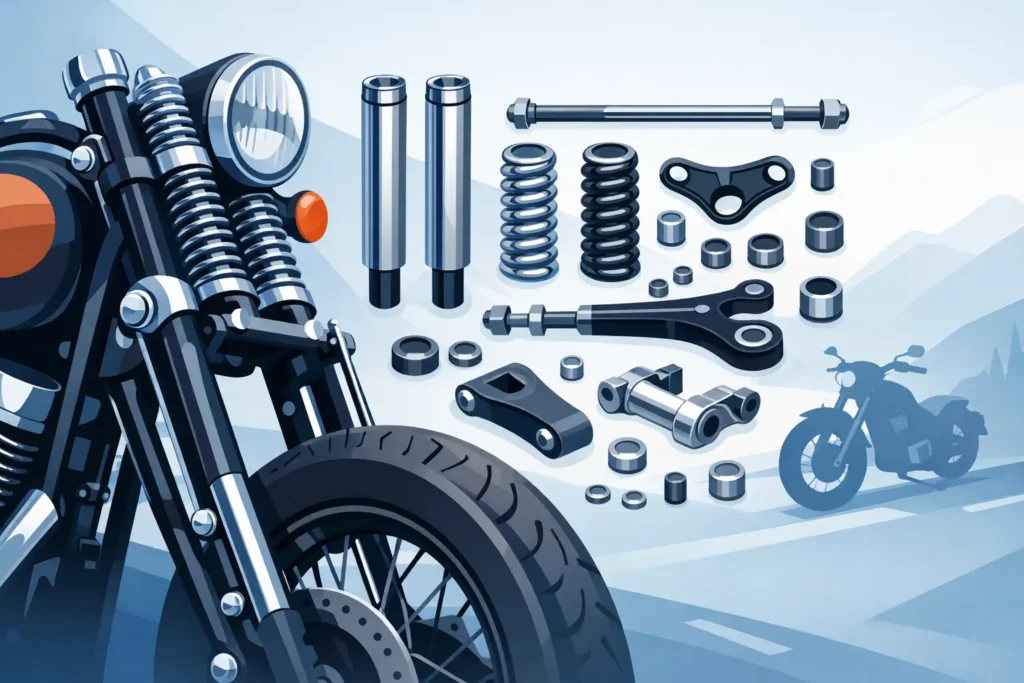
Harley Springer Fork Parts That Fit Right, A springer front end can make a Harley look exactly right – whether you are chasing a faithful Knucklehead restoration, building a long-fork chopper, or giving a cruiser some old-school attitude. But Harley Springer fork parts are not a one-size-fits-all pile of chrome. A rocker that looks close can have the wrong axle spacing. A forged fork leg can be straight but worn where it counts. One missing bushing, spring rod, or brake anchor can turn a promising front end into a garage ornament. Springer Front End
The smart move is to identify the fork assembly before buying individual pieces. Know the year range you are working with, the wheel and brake setup, the neck and stem dimensions, and whether the goal is stock restoration or a custom build. That saves money, avoids unsafe mismatches, and gets your bike back on the road faster. Harley Springer Fork Parts That Fit Right
Start With the Springer Fork Style
The word “springer” covers several different Harley front-end designs. Early OEM Harley springers, later factory-style assemblies, aftermarket reproductions, custom extended units, and late-model Springer Softail forks may share the basic visual idea, but their parts often do not interchange.
A vintage inline springer typically uses a pair of rigid front legs, rear legs, rockers, a top tree, a lower tree, springs, rods, and pivot hardware. Its ride comes from the springs and the rocker movement, not hydraulic fork tubes. That simplicity is part of the appeal, but every pivot point matters. Wear or looseness at the rockers can show up as wandering, braking instability, or a front wheel that will not track true. Harley Springer Fork Parts That Fit Right
Springer Softail assemblies are their own category. They may carry Harley-Davidson fitment and factory engineering, but they have different trees, brakes, wheels, fenders, and hardware than a 1930s or 1940s-style springer. Do not buy based on appearance alone. Ask for part numbers, measurements, model fitment, and clear photos of the mounting points. Harley Springer Fork Parts That Fit Right
Custom springers add another layer. Builders commonly change fork length, rake, trail, wheel diameter, axle size, and brake type all at once. An extended springer may fit the neck but still create poor handling if it does not match the frame geometry. Longer is not automatically better. A bike that looks mean parked outside the shop still needs to steer, stop, and stay stable at speed.
Harley Springer Fork Parts Worth Inspecting First
When buying a complete used assembly, inspect it as a system. When buying pieces separately, be even more careful. These are the parts that deserve the closest look:
- Rockers and rocker studs: Check for cracks, bent arms, egg-shaped pivot holes, damaged threads, and loose or seized bushings. Rockers control axle position and steering behavior.
- Fork legs and rear legs: Look down their length for bends, collision damage, deep rust pitting, poor repairs, and altered tabs. A shiny repaint can hide a hard life.
- Spring rods, springs, and retainers: Verify that the rods are straight, threads are usable, and the springs match the setup. Mismatched springs can affect ride height and movement.
- Trees, stem, and bearings: Confirm stem length and diameter, tree spacing, bearing fit, and lock-to-lock clearance at the frame. These details decide whether the fork actually belongs on your bike.
- Axle, spacers, and wheel hardware: Measure axle diameter and hub width. A front wheel can sit between the rockers and still be badly misaligned without the correct spacers.
- Brake mounts and anchor hardware: Drum brake tabs, disc caliper brackets, rotor spacing, and brake anchor points must match the wheel and fork design.
Surface rust is not always a deal breaker on an original piece. Plenty of vintage parts clean up well, and honest patina can belong on a survivor build. Structural rust around a spring rod mount, fork leg, rocker pivot, or tree is different. If corrosion has eaten into a load-bearing area, walk away or plan for professional evaluation and repair. Harley Springer Fork Parts That Fit Right OEM Harley Springer Handlebar Risers FXSTS FLSTS Chrome Factory 4″
OEM, NOS, Used, or Aftermarket?
The right choice depends on the bike and the rider. A numbers-conscious restoration usually calls for OEM parts whenever possible, with correct castings, hardware, finish, and era details. Original Harley pieces have collector value, but they may need bushings, straightening, plating work, or careful rebuilding before they are road-ready.
NOS parts can be a strong find because they are period-correct and unused, but old stock is not automatically perfect. Rubber components harden, plated surfaces can deteriorate in storage, and a decades-old boxed part may still need inspection. Verify the actual item, not just the label on the package.
Used parts are often the best path for riders who want real Harley character without building a museum bike. The key is condition. A clean used rocker or tree with known fitment can be a better buy than a questionable “rare” part with hidden damage. Harley Springer Fork Parts That Fit Right
Aftermarket springer components make sense for many custom builds. They can offer new materials, available replacement hardware, longer lengths, and finishes that suit a chopper or bobber. The trade-off is that quality varies. Buy the right manufacturer-grade component for a steering and suspension job, not the cheapest part that happens to look good in a photo.
Fitment Is More Than the Fork Year
A common mistake is treating a springer fork as a standalone accessory. It connects the frame, front wheel, brake, fender, handlebars, and suspension movement. Change one part, and another part may need attention.
Start at the steering neck. Measure the stem and confirm the bearing arrangement for the frame. Then move outward: tree width, fork-leg spacing, rocker configuration, axle diameter, wheel hub width, and brake setup. If you are running a vintage mechanical drum brake, make sure the anchor arrangement is correct. If you are converting to a disc brake, verify caliper clearance, rotor location, and hose routing through the full steering sweep.
Fender fit deserves the same attention. A narrow vintage fender, a 21-inch spool wheel, and a stock-length springer may work together beautifully. Swap in a wider tire or a different rocker profile, and clearance changes. Cycle the suspension by hand before final assembly. Check the fender, brake line, tire, and any headlight or accessory brackets for contact points.
Rebuild It Like a Steering Component, Not a Decoration
Springers are mechanical, visible, and straightforward to understand. That does not mean they are casual bolt-on work. The front end carries the wheel, absorbs road shock, and takes braking force. If there is any doubt about cracks, alignment, worn pivots, or correct assembly, bring in a qualified motorcycle mechanic or vintage Harley specialist.
Use the correct bushings, washers, lock hardware, and torque specifications for the assembly you are building. Do not substitute random hardware-store bolts in rocker pivots or spring hardware because the threads happen to fit. Grade, shoulder length, diameter, and engagement all matter. Safety-wire or locking provisions should be restored where the design calls for them.
After assembly, check for smooth steering-head movement, proper wheel alignment, controlled rocker motion, and no side play where there should not be any. Then recheck everything after the first short ride. Fresh bushings can settle, and a small amount of looseness at the front end becomes obvious quickly on a Harley. Harley Springer Fork Parts That Fit Right
Finding the Hard-to-Get Pieces
Complete springer assemblies are easier to spot than the small pieces that finish a build. A correct lower spring retainer, rocker stud set, original brake anchor, axle spacer, or period-correct fender bracket can hold up a project for months. That is where a warehouse with mixed OEM, used, NOS, aftermarket, and vintage inventory earns its keep.
At Harley Warehouse, it pays to ask about the specific piece you need, even if it is not shown online. Have measurements, photos, part numbers, and your bike’s year and model ready. Tell the parts team whether you need original equipment, usable used condition, or a custom-ready replacement. Clear information gets you closer to the right part than saying you need “something for a springer.”
A springer front end should look tough, but its real job is keeping the tire pointed where the rider intends. Build it with the right Harley Springer fork parts, verify every contact point, and you will have a front end that earns its stance every mile. Harley Springer Fork Parts That Fit Right