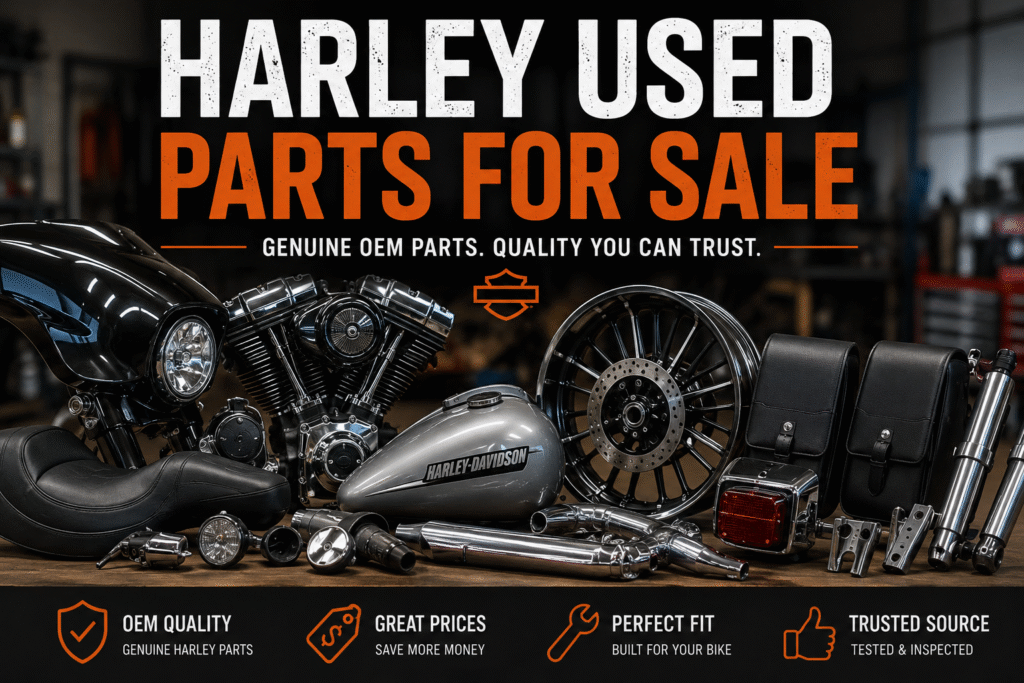
If you’ve ever priced out a new OEM Harley-Davidson part, you already know why so many riders search for Harley used parts for sale instead. A used part can cost 40-70% less than new, and if you know what to look for, it can perform just as well. Harley davidson parts and accessories This guide walks you through where to find quality used Harley parts, how to verify they’re the right fit for your bike, and what to avoid so you don’t end up with a part that costs you twice. harley used parts for sale Home
Why Riders Choose Used Harley-Davidson Parts
Harley-Davidson parts are built to last — which is exactly why the used market is so strong. A pulled part from a 2015 Softail didn’t wear out; it usually came off during a customization, an insurance salvage, or an engine swap. That means you can often find:
- OEM quality at aftermarket prices — genuine Harley parts, not knockoffs
- Discontinued and hard-to-find parts for older models Harley no longer stocks
- Faster turnaround than waiting on backordered new parts
- Better resale value if you ever sell the bike, since OEM parts hold value better than generic replacements
Whether you’re restoring a vintage Shovelhead, repairing storm or collision damage, or just building out a custom project bike, used parts are often the smartest way to get authentic Harley components without draining your wallet.
What to Look for When Buying Used Harley Parts
Not every used part is a good deal. Before you buy, run through this checklist:
1. Match the Part Number, Not Just the Model
Harley parts changed across model years, even within the same model name. A gas tank off a 2010 Street Glide may not bolt onto a 2018 Street Glide without modification. Always cross-reference the Harley-Davidson part number (usually stamped or on a sticker) rather than relying on “it’s from a Street Glide” alone. Saddlemen Roadsofa HC Honeycomb 2-Up Seat For Harley
2. Ask About the Part’s History
A reputable seller can tell you whether the part came from a running bike, a wreck, or a bike that was parted out for another reason. Parts from collision-damaged bikes aren’t automatically bad, but frame, fork, and wheel components should get extra scrutiny for hidden stress damage. Step-by-Step Guide to Building a Hardtail Chopper from Scratch
3. Inspect Wear Items Closely
Some used parts are fine to buy without hesitation — mirrors, floorboards, saddlebags, fenders, and trim. Others need a closer look:
- Engines and transmissions — ask for compression numbers or a running video, and check for oil in the wrong places
- Wheels and rotors — check for trueness, cracks, and rotor thickness
- Electrical components — stators, regulators, and ECMs can fail without visible damage, so ask if it’s been tested
- Brake and clutch components — these are safety-critical; when in doubt, buy new
4. Confirm Compatibility With Your VIN
The safest way to guarantee fitment is to give the seller your bike’s VIN or your model year, engine size, and trim. A good used parts dealer will confirm fit before you buy, not after. harley used parts for sale Harley Used Parts for Sale: The Complete Buyer’s Guide (2026)
Where to Find Harley Used Parts for Sale
You’ve got a few solid options, each with tradeoffs:
Salvage yards and parts specialists — Dedicated Harley salvage yards part out wrecked or non-running bikes and catalog the components. This is usually the most reliable source because the parts are tested, cleaned, and often come with a return window. harley used parts for sale Black Thunderheader Exhaust pipe
Online marketplaces — Sites like eBay Motors and Facebook Marketplace have huge inventory, but quality control is on you. Stick to sellers with strong ratings and detailed photos, and always ask questions before paying.
Local swap meets and HOG chapter events — Harley Owners Group meetups and regional swap meets are a great way to inspect parts in person and talk directly to the person who pulled them.
Independent Harley shops — Many local shops keep a stash of take-off parts from customer upgrades. It’s worth calling around, especially for common upgrade items like exhaust systems, seats, and handlebars.
Common Parts Riders Buy Used
Some categories are especially popular on the used market because they’re expensive new and hold up well over time:
- Engines (Evolution, Twin Cam, Milwaukee-Eight)
- Transmissions and primary drives
- Fuel tanks and fenders
- Wheels, rotors, and pulleys
- Handlebars, risers, and controls
- Seats and saddlebags
- Mirrors, floorboards, and highway pegs
- Exhaust systems and pipes
| Feature | Used OEM Harley Parts | Aftermarket Parts |
|---|---|---|
| Factory Fit | ✔ | Varies |
| Harley Quality | ✔ | Depends on manufacturer |
| Price | Lower | Varies |
| Reliability | Excellent | Varies |
| Original Appearance | ✔ | Not always |
Are used Harley parts worth buying?
Yes. High-quality used OEM Harley parts can provide excellent value while maintaining factory fit and reliability.
Are OEM Harley parts better than aftermarket?
OEM parts are manufactured specifically for Harley-Davidson motorcycles, ensuring proper fitment and original quality. Some premium aftermarket brands also produce excellent components, but quality varies by manufacturer.
Can I install used Harley parts myself?
Many components can be installed by experienced DIY mechanics. More complex items such as suspension, brakes, or engine parts may require professional installation.
Pingback: Harley Springer Fork Parts That Fit Right - HARLEY WAREHOUSE
Pingback: Choosing Harley Gas Tanks That Fit Right - HARLEY WAREHOUSE
Pingback: Harley Hard Saddlebags vs Soft Saddlebags - HARLEY WAREHOUSE