
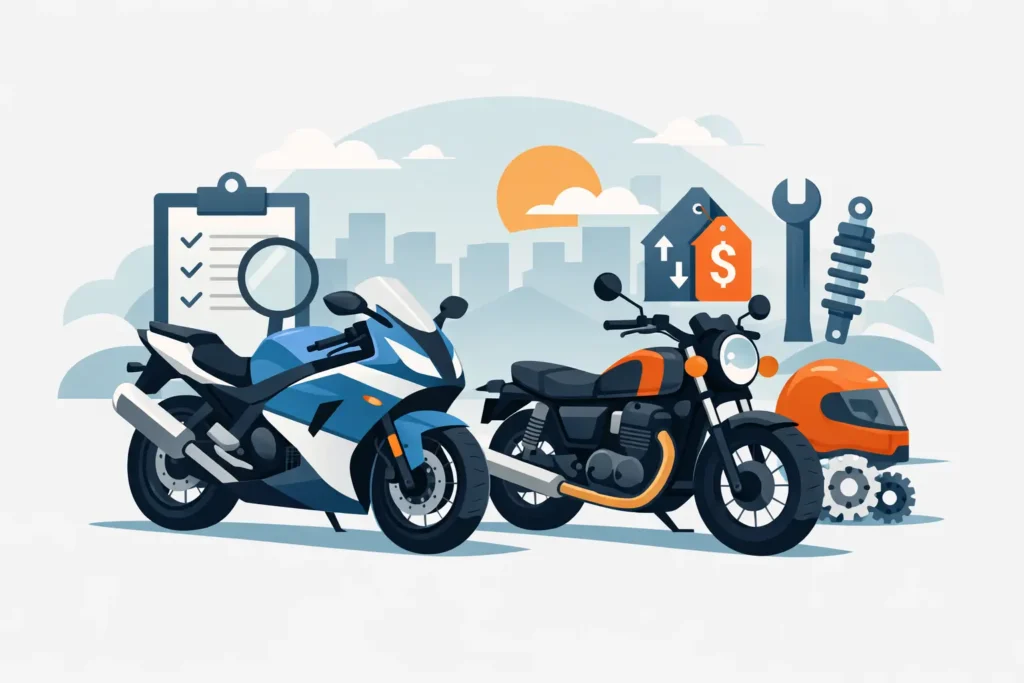
A clean photo and loud pipes can make almost any bike look like a deal. Used motorcycles deserve a closer look. The right machine can be a dependable daily rider, a long-haul bagger, a stripped-down bar hopper, or the foundation for the chopper you have been planning for years. The wrong one can turn into a pile of missing hardware, bad wiring, and expensive surprises before the first real ride. Used Motorcycles Worth Buying and Building
The goal is not to find the cheapest bike in the listing. It is to find the motorcycle with the right bones for what you want to do. A well-kept Evo, Twin Cam, Sportster, Shovelhead, Road Glide, Japanese sportbike, or vintage British machine can all be a solid buy when its condition, paperwork, and parts situation make sense. Used Motorcycles Worth Buying and Building
Start With the Ride You Actually Want
Before looking at used motorcycles, decide whether you want to ride, restore, customize, or collect. Those are different missions, and they change what matters most.
A rider looking for weekend miles should put reliability, service history, tire date codes, charging performance, and overall comfort near the top of the list. A builder may be willing to take on cosmetic damage, worn paint, or an incomplete exhaust if the frame, engine cases, title, and major components are right. A collector may care most about original paint, matching numbers, factory hardware, and period-correct parts.
Be honest about your garage time and budget. A running, titled bike with a few needs usually costs more up front but gets you on the road faster. A project bike may look cheap until you add a carburetor, tank, seat, controls, wiring harness, brakes, tires, title work, and the dozens of small brackets and fasteners nobody remembers until the build is on the lift.
Choose a Platform With a Parts Future
Some bikes are easier to own because replacement and upgrade parts are everywhere. Harley-Davidson platforms have deep support across OEM, used, NOS, and aftermarket inventory. That matters when you need a factory spacer for an older FLH, a Dyna swingarm, a Sportster tank, Road Glide fairing hardware, or period-correct pieces for a Shovelhead restoration.
That does not mean rare bikes are a bad move. A Norton, Indian, military-era motorcycle, classic metric bike, or unusual custom can be a killer addition to the garage. Just price the ownership experience, not only the purchase. Check what is available before you buy the bike. A rare side cover or impossible-to-find transmission part can turn a bargain into a long-term shelf project.
How to Inspect Used Motorcycles Before You Commit
A proper inspection is not about finding a flawless bike. It is about knowing what you are buying and deciding whether the price matches the work ahead. Ask to see the motorcycle cold if possible. A bike that starts easily only after it has been warmed up may be hiding hard-starting, carburetion, compression, or charging issues.
Walk around the bike slowly. Look at the frame neck, downtubes, engine mounts, swingarm area, wheels, forks, controls, and underside. Fresh paint is not automatically suspicious, but paint can hide damage, bad repairs, or corrosion. Check for uneven panel gaps, mismatched finishes, bent levers, scraped cases, and hardware that looks like it came from five different motorcycles.
Check the Numbers and Paperwork
The VIN on the frame and the title need to match. Read the number yourself. Do not rely on a seller saying it is clean, registered, or easy to transfer. Titles, registration rules, and VIN requirements vary by state, and California buyers should be especially careful with out-of-state bikes, salvage history, missing paperwork, and emissions-related rules.
On vintage motorcycles, engine and frame numbers may carry real value. Matching numbers, original cases, and correct castings can matter more than shiny aftermarket accessories. If a seller claims a bike is rare, factory-original, or a special model, ask for details that back it up. Provenance is worth something when it is documented, not just repeated in a listing.
Look Past the Chrome
Inspect the tires for cracking, flat spots, and date codes. Tires with good tread can still be old enough to replace. Check brake rotors, pads, calipers, master cylinders, brake lines, fork seals, wheel bearings, and steering-head movement. Grab the front brake and rock the bike lightly. Feel for a clunk from the neck or suspension.
Look for oil leaks, but keep the situation in perspective. A light seep on an older Harley is different from a steady leak running down the cases, pooling underneath, or contaminating the rear tire. Examine the primary, transmission, rocker boxes, pushrod tubes, fork legs, and final-drive area. On a chain-driven bike, inspect sprocket wear, chain condition, adjustment, and signs of poor lubrication.
Wiring deserves extra attention on customs and older machines. Check for taped connections, loose grounds, non-fused accessories, melted insulation, and switches that only work when held in a certain position. A clean wiring job is a good sign. A rat’s nest under the seat is a bargaining point at best and a reason to walk away at worst.
Take the Test Ride Seriously
If the seller allows a test ride, use it to answer specific questions. Does the engine start cleanly? Does the clutch engage smoothly? Does the transmission shift through every gear without popping out? Does the bike track straight when you loosen your grip? Do the brakes pull evenly without a soft lever or pulsing rotor?
Listen for more than exhaust noise. Top-end clatter, bottom-end knock, primary noise, wheel-bearing howl, and transmission whine all have different causes and different repair bills. A loud pipe can cover a lot of mechanical sound, so let the bike idle and listen from both sides.
Heat matters too. Let the motorcycle reach operating temperature. Watch for smoke, overheating, fuel leaks, charging lights, or an idle that falls apart once the engine is warm. A bike can feel strong for the first five minutes and show its real condition when traffic, temperature, and vibration enter the picture.
Price the Whole Job, Not Just the Motorcycle
The best used-bike deal is not always the lowest asking price. Start with the purchase number, then add the work required to make it safe, legal, and fit for your ride. At minimum, account for title and registration costs, tires, fluids, battery, brake service, a full inspection, and any deferred maintenance.
Then price the parts that make the motorcycle yours. Maybe that means bars, cables, a seat, luggage, exhaust, suspension, lighting, a fairing, or a new tank. On a restoration, it may mean OEM controls, correct fenders, factory brackets, badges, or old-stock hardware. A bike with quality components already installed can be worth more than a cheaper one loaded with parts you will immediately remove.
Do not assume every modification adds value. A well-built custom with clean fabrication and known parts can be a strong buy. A hacked frame, poorly mounted fuel tank, questionable welds, or electrical work done with household connectors can erase value fast. If you cannot identify the builder’s work or the components used, price it like a project.
When a Warehouse Search Beats a Random Listing
Online classified ads are useful, but they only show what one seller happens to have. If you know the platform, year range, engine, or style you want, working with a motorcycle operation that understands fitment and carries real inventory can save time. Harley Warehouse serves riders, builders, repair shops, and collectors looking for complete motorcycles as well as the parts that keep them alive.
That matters when you find a bike with a missing fender, damaged fairing, wrong controls, or incomplete drivetrain. A motorcycle does not have to be perfect on day one if the right used, OEM, NOS, or aftermarket parts can be sourced without turning the search into a six-month scavenger hunt. Ask direct questions about condition, model years, compatibility, and what is included. Good answers are part of a good purchase.
Know When to Walk Away
A few issues should stop the deal until they are fully explained: a VIN that does not match the paperwork, a seller who will not allow a basic inspection, obvious structural damage, severe engine noise, unsafe brakes, or a title story that keeps changing. There will always be another motorcycle.
Walking away is not losing a deal. It is protecting your build budget and your riding season. The bike worth bringing home is the one that matches your plan, has a story supported by the metal and paperwork, and leaves enough room in the budget to make it yours. Find that machine, get the details straight, and then get it out on the road where it belongs.
Pingback: how to identify OEM Harley parts - HARLEY WAREHOUSE