
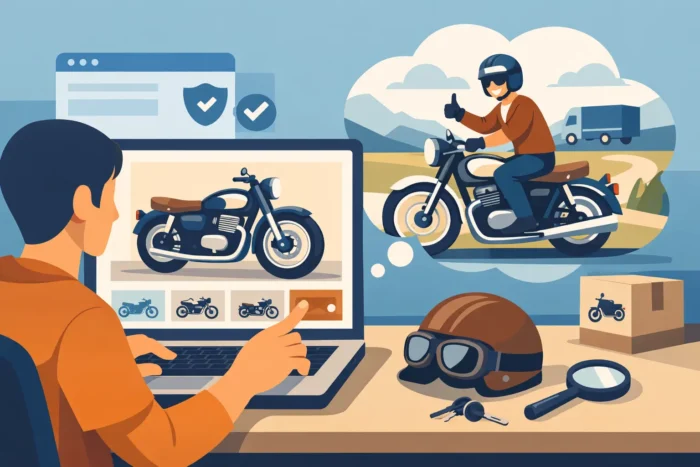
A clean photo of a 1968 FLH or a British twin with the right patina can make a rider reach for the deposit fast. But a classic motorcycle is not a new bike with old styling. It may have a title issue, an engine that has been sitting for 20 years, mismatched cases, aftermarket wiring, or a parts problem hiding behind a fresh coat of paint. Buying classic motorcycles online can land you a machine you will keep for decades, but only if you inspect the listing like a mechanic, not a spectator.
Buying Classic Motorcycles Online Starts With the Right Questions
Before you worry about price, decide what kind of old bike you are actually hunting. A numbers-matching collector piece, a running rider, a period-correct restoration, and a rough project are four different purchases. The same 1970s Harley may be a bargain for a chopper builder and a bad deal for a collector who needs original paint, factory cases, and correct hardware.
Ask the seller how the bike is meant to be used right now. Can it be ridden home after a basic safety check? Has it been stored for years? Is it a restoration that needs final assembly, or a complete motorcycle that has been regularly started and ridden? A seller who knows the machine should be able to answer directly without turning every question into a sales pitch.
Pay close attention to phrases such as runs with a little work, easy restoration, turns over, or complete. Turning over is not running. Complete does not mean correct. Easy is subjective, especially when the missing part is a rare OEM timing cover, a specific magneto, or a one-year-only bracket that took somebody five years to find.
Match the Bike to Your Garage Skills
Be honest about the work you can do and the work you want to pay for. A carbureted Shovelhead with a known charging issue may be a solid weekend fix for an experienced owner. A long-stored machine with a seized motor, no title, and a chopped frame is a different level of commitment.
Old motorcycles reward patience, but they also consume space, time, and money. If your goal is to ride this season, prioritize a titled, running bike with documented maintenance over a cheaper project that needs every system rebuilt. If you are building a period chopper or restoring a rare model, a project can make sense – provided the hard-to-find foundation pieces are there.
Read the Listing for What It Does Not Say
Photos are evidence, not proof. Look past the glamour angle and study the details. You want clear shots of both sides of the engine, the frame neck, VIN or serial-number areas, wheels, forks, exhaust, controls, wiring, underside, and any damaged spots. If the listing only shows ten polished beauty shots, ask for the photos it skipped.
For Harley-Davidson models, inspect the cases, heads, rocker boxes, transmission, primary, and frame for signs of repairs or mismatched parts. Some changes are normal on a bike that has been alive for 40 or 50 years. Others can affect value, registration, reliability, or all three. A repair to a cracked case is not automatically a deal-breaker, but it should be disclosed, photographed, and reflected in the price.
Ask for a cold-start video when possible. The seller should show the bike before it is fired, start it, let it idle, and run through lights, horn, clutch, transmission, and brakes. Listen for hard knocking, major top-end noise, smoke that hangs in the air, or a transmission that refuses to shift cleanly. A video cannot replace an inspection, but it can expose a bike described as running that only runs after a can of starting fluid and a long push downhill.
Do not confuse shiny paint with a finished mechanical job. Fresh paint can be a great sign on a cared-for restoration. It can also cover poor bodywork, weld repairs, or a bike assembled from unrelated parts. Ask when the work was done, who performed it, and whether there are receipts or build photos.
Verify VINs, Titles, and Numbers Before Sending Money
Paperwork is where an exciting deal can turn into a parked garage ornament. Confirm that the title is in the seller’s name, that the VIN on the title matches the VIN on the motorcycle, and that the title status is clear. If the seller says a title is easy to get, treat that as a research assignment, not a promise.
Rules vary by state, and older motorcycles can have frame numbers, engine numbers, factory stampings, and state-assigned VIN tags that do not look like modern vehicle identification numbers. Know what is correct for the year and make you are considering. A knowledgeable marque club, a local title professional, or a qualified vintage-bike appraiser can help you understand what you are seeing.
Matching numbers matter most when originality drives the value. They may matter less on a custom or rider-grade machine, but you still need to know what is original, what has been replaced, and why. Never accept a ground-off number, an altered VIN area, or a vague explanation about paperwork because the price looks tempting. Walk away. There will be another motorcycle.
Price the Whole Project, Not the Purchase
The listed price is only the first number. Build a realistic budget for transport, taxes and registration, insurance, inspection, tires, battery, fluids, brakes, fuel-system cleaning, and the parts you already know it needs. Then leave room for the surprises every old bike keeps in reserve.
A classic that starts and moves may still need wheel bearings, steering-head service, fork seals, old rubber lines, a charging-system check, and a full brake inspection before it is safe to ride. Tires with plenty of tread can still be too old to trust. Gas tanks that look clean outside may be rusty inside. Original wiring may be charming until the headlight goes dark on a two-lane road.
Parts availability changes the math. A common Evolution-era part may be easy to source. Correct pieces for early Harley, Indian, Norton, military, or obscure metric models may require real hunting. This is where a deep warehouse inventory and a phone call can save a build. Harley Warehouse carries a wide range of used, OEM, NOS, aftermarket, and vintage pieces, and some of the best finds are not obvious from a quick online search.
Arrange a Real Inspection When the Money Is Serious
For a higher-dollar bike, pay for an independent inspection. Find a mechanic, restoration shop, appraiser, or trusted rider near the seller who understands the specific brand and era. Ask them to check compression, leaks, shifting, charging, brakes, frame condition, fork action, wheel condition, VIN areas, and title details.
If you cannot arrange a professional inspection, request a live video call. Have the seller show the serial numbers, cold start, controls, tank interior, tires, charging voltage if available, and every area you are concerned about. A legitimate seller may be busy, but they understand why a buyer wants proof before wiring serious money across the country.
Use a payment method with a clear paper trail. Put the agreed condition, included parts, title status, deposit terms, and pickup or shipping plan in writing. If extra parts are included, list them specifically. A box of parts can mean valuable original tins and brackets, or it can mean three coffee cans of mystery bolts.
Ship It Like the Machine Matters
Choose a motorcycle hauler that handles collector bikes, not just whoever offers the lowest quote. Confirm whether the bike will be crated, strapped upright, covered, transferred between trucks, and insured during transport. Ask what happens if delivery is delayed or the motorcycle arrives damaged.
Before pickup, have the seller take dated photos from every angle. Photograph the odometer, VIN area, paint, chrome, engine cases, and loose parts. Do the same at delivery before you sign anything. This is not distrustful behavior. It is standard protection for a machine that may be rare, fragile, or impossible to replace exactly.
Once it arrives, resist the urge to immediately chase the first ride. Check fasteners, fuel lines, brakes, tires, controls, lights, oil, transmission fluid, and charging system. A careful first weekend in the garage is cheaper than learning about a stuck throttle or weak front brake at speed.
The right classic motorcycle should give you a story worth telling, not a problem you have to explain away. Ask the hard questions, inspect the mechanical truth beneath the paint, and buy the bike that fits both your vision and your wrenching reality. Then get it sorted, point it toward open road, and let it earn its next chapter.