
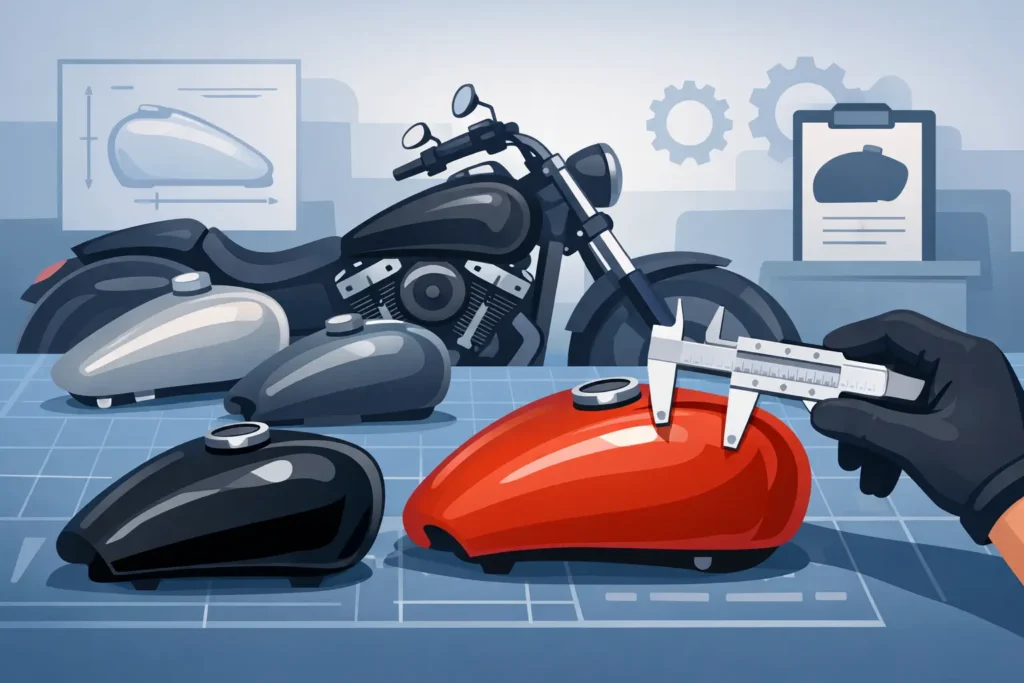
Harley Gas Tanks That Fit Right can make or break the whole motorcycle. The wrong one can leave you fighting tunnel clearance, chasing fuel leaks, relocating mounts, or staring at a gap between the tank and seat that looks plain wrong. The Harley Gas Tanks That Fit Right bring the build together, whether you are putting an FLH back to factory shape, freshening a Sportster, or building a stripped-down chopper that needs a tank with real attitude. 5 Gallon Fatboy Gas tank 1979 Flh Shovel Head Oem Emblem mount Harley emblem
A tank is not just a painted shell. It affects fuel range, rider position, the look of the bike, and what parts will work around it. Before buying, get clear on the frame, year range, mounting style, fuel setup, and the condition you can realistically work with. Harley Gas Tanks That Fit Right Black OEM Gas Tank Factory Sportster XLH XLCH Ironhead 1957-1978 Peanut 900 1000
Start With Fitment, Not Paint
Paint can be changed. Bent mounting tabs, a mismatched tunnel, or the wrong fuel-injection arrangement can turn a bargain into a garage ornament. Start with the exact platform and model year, then verify the details that matter for that particular bike.
On older Harleys, a tank that appears similar may have different front mounts, rear mounting locations, petcock positions, dash provisions, or tunnel widths. A Shovelhead FLH tank is not automatically a bolt-on solution for every Big Twin frame. The same goes for Sportsters, where frame and tank changes across generations can affect how the tank sits, how the seat meets it, and where the fuel line runs.
Later-model bikes add another layer. Carbureted and fuel-injected tanks are not interchangeable without planning. Fuel-injected models need the correct opening and provisions for the fuel pump assembly, while carbureted setups need the appropriate petcock location and fuel outlet. A tank may physically sit on the frame and still be completely wrong for the fuel system. Harley Gas Tanks That Fit Right
If you are fitting a tank outside its intended year range, treat it as a fabrication project, not a quick replacement. That can be the right call for a custom build, but measure first. Check the backbone, tunnel, neck angle, front and rear mount spacing, handlebar clearance at full lock, seat fit, and clearance for gauges or consoles.
Harley Gas Tanks Come in Different Jobs
The tank you need depends on how you use the motorcycle. A rider putting highway miles on a Road King has different priorities than someone assembling a narrow-framed rigid chopper.
Full-size FL and touring tanks are built for range and visual presence. They work naturally with large seats, floorboards, bags, and factory-style consoles. If you are restoring a classic dresser or building a period-correct FLH, the tank’s shape, dash mount, badges, trim holes, and crossover setup can matter as much as basic fitment.
Sportster tanks offer several directions. Peanut tanks keep a build compact and raw, but their smaller capacity means more fuel stops. Larger Sportster-style tanks offer better range and a broader canvas for paint without losing the lean look that makes an XL platform fun to build.
Dyna and Softail tanks tend to follow the lines of their specific frames and seats. A change that looks simple online can alter the stance of the entire bike. Tank length, rear profile, and the way it drops toward the seat are all worth studying before you commit.
Custom tanks are where builders can get creative, but practicality still rides along. Frisco-mounted tanks, narrow chopper tanks, coffin tanks, split tanks, and stretched designs can give a bike its identity. They can also require custom mounts, modified fuel lines, a relocated ignition switch, and a seat built around the tank rather than the other way around.
Used, OEM, NOS, or Aftermarket?
There is no single best choice. The right tank depends on whether your goal is originality, speed, budget, or a one-off build.
An OEM used tank often makes sense when factory fit is non-negotiable. Original mounting points, factory contours, and correct hardware locations save time, especially on restoration projects. Used does not mean worn out, though. A solid original tank with faded paint may be far more valuable than a freshly painted tank hiding old repairs.
NOS tanks are attractive when you want an unused period-correct part, but age still matters. Storage conditions can affect coatings, seals, threads, and internal surfaces. Inspect an old-stock tank as carefully as a used one. “New” may describe mileage, not necessarily condition after decades on a shelf.
Aftermarket tanks are a practical choice for many riders and builders. They can offer fresh metal, a clean paint-ready surface, and styles not available from the factory. Quality varies, so pay close attention to welds, petcock bungs, cap threads, tunnel shape, and mounting tab thickness. Cheap metal and sloppy mounting geometry cost more once you start modifying them to fit.
For rare models and older projects, a warehouse inventory can be the difference between settling for close enough and finding the right-era piece. Harley Warehouse carries new, used, OEM, NOS, aftermarket, and vintage inventory, and some of the best parts are the ones worth calling about because they never make it into every online listing.
Inspect the Tank Before It Becomes Your Problem
A tank can look clean from ten feet away and still have serious issues inside. If you are buying used, ask direct questions and inspect every available photo. Focus on structure, not just the finish.
Look closely at the lower seams, mounting tabs, petcock area, fuel crossover fittings, filler neck, and any area under trim or knee pads. Rust around a seam can be a warning that the metal has thinned from the inside out. Dents are usually repairable, but sharp creases, crushed tunnel sections, and previous body filler deserve closer attention.
Internal rust is one of the biggest concerns. Light surface discoloration may be manageable with proper cleaning and tank treatment. Heavy flaking corrosion can clog filters, foul carburetors, damage a fuel pump, and keep coming back after a rushed cleanup. Look inside with a light when possible. A clean liner can be good news, but a peeling liner is a problem waiting to circulate through your fuel system. Harley Gas Tanks That Fit Right
Also inspect threads and fittings. Cross-threaded petcock holes, damaged cap threads, stripped mounting holes, and broken studs can all be repaired in some cases, but each repair adds time and uncertainty. On a rider, dependability matters more than saving a few bucks on a tank that needs extensive work.
Plan the Parts Around the Tank
The tank is part of a system. Before ordering, think through the cap, petcock or fuel pump, gauge or dash, console, fuel line, crossover hardware, mounting bolts, rubber isolators, emblems, and seat. A tank that seems inexpensive can become costly when every related piece has to be sourced separately.
This is especially true on restoration work. Factory tanks may require specific caps, dash panels, tank badges, trim strips, or hardware that changed by year. On custom builds, the opposite can happen: simplifying the tank can mean removing a console, moving the speedometer, switching to a different ignition location, or building a new seat mount.
Fuel capacity deserves an honest look too. A small tank looks tough at the coffee shop, but it may turn a 150-mile ride into a constant hunt for the next station. If the bike is a local bar hopper or a show build, that trade-off may be fine. If it is your weekend escape machine, range should carry more weight. Harley Gas Tanks That Fit Right
Finish Last, After the Test Fit
Do not send a tank to paint before it has been test-fitted with the seat, bars, controls, and the major parts around it. Mount it, turn the bars lock to lock, check cable and wire clearance, install the seat, and look at the bike from both sides. This is when you catch the small details that make a finished motorcycle look intentional instead of pieced together.
Once fitment is confirmed, you can decide whether the tank needs preservation, repair, paint, powder-coated trim, period decals, or a bare-metal custom finish. Original paint can be the right move on a survivor bike. A clean solid-color paint job may be better for a daily rider. For a chopper, the tank may be the whole statement. Harley Gas Tanks That Fit Right
Buy the tank that matches the bike you are building, not the one that only looks right in a listing photo. Measure the frame, verify the fuel system, inspect the condition, and collect the related hardware before the wrenching starts. Do that, and your next tank will help keep the ride roaring instead of holding the whole project up. http://harleydavidson.com
Pingback: Chopper Parts That Fit the Build and the Road - HARLEY WAREHOUSE
Pingback: Harley chopper parts that fits - HARLEY WAREHOUSE