
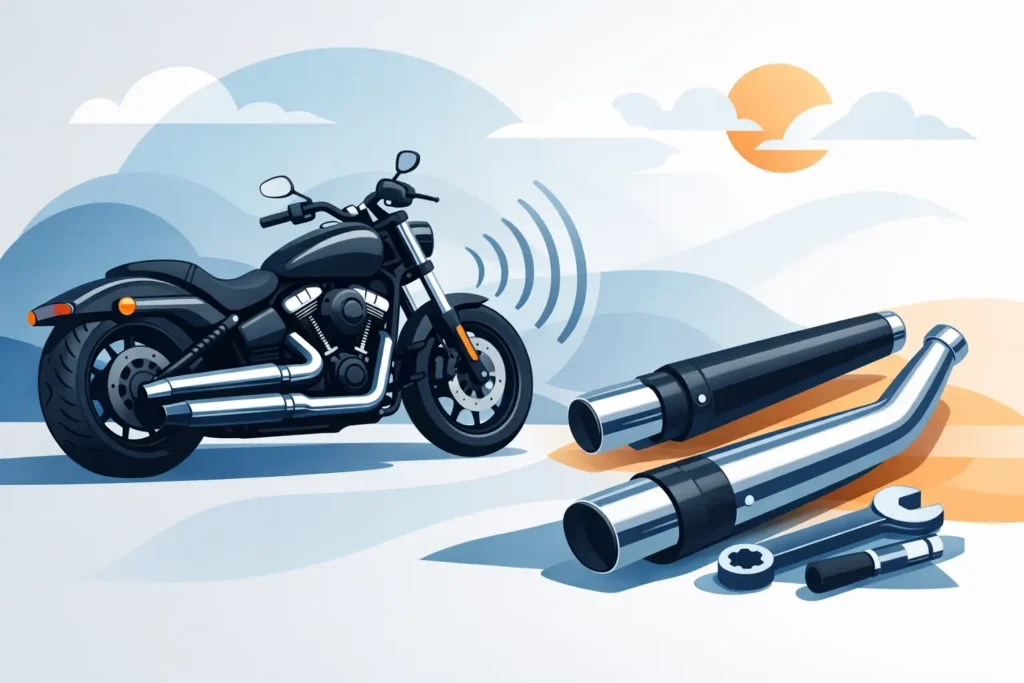
A Harley exhaust system upgrade changes more than the note rolling out of the parking lot. It affects throttle response, rider heat, ground clearance, service access, passenger comfort, and whether the bike still fits the way you actually ride. The right pipes can give a stock bagger a deeper, cleaner voice or help a built Dyna breathe at higher rpm. The wrong setup can leave you with a loud bike that drones on the freeway, scrapes in corners, or runs poorly because the tune was ignored. Harley Exhaust System Upgrade 2 into 1 chrome Bassani exhaust
Before chasing the biggest sound, decide what your Harley needs. A weekend bar hopper, cross-country Road Glide, rigid chopper, and numbers-matching Shovelhead do not ask the same things from an exhaust.
Start a Harley Exhaust System Upgrade With Fitment
Fitment is where a good purchase starts. Harley exhaust systems are not universal just because the engine family looks similar. Model year, engine size, chassis, floorboards or mid-controls, saddlebags, side covers, wheel size, and aftermarket accessories can all affect what bolts on cleanly. Harley Exhaust System Upgrade Black Thunderheader Exhaust pipe
A Touring system may interfere with bags or rear axle access if it was designed for another year range. A Softail setup may not clear a forward-control conversion. On Sportsters, the location of the brake pedal, passenger pegs, and oil tank can make a major difference. Builders working with Shovelheads, Panheads, or custom frames have another layer to consider: pipe routing, mounting tabs, kicker clearance, and whether the exhaust needs to match period-correct hardware. Home
Check the manufacturer’s stated fitment, then look at your actual motorcycle. Pay attention to every modification already on it. A wider rear tire, extended bags, lowered suspension, aftermarket cam cover, or custom foot controls can turn a supposedly simple bolt-on job into a fabrication project. Harley Exhaust System Upgrade fxr thunderheader vs 2 into 1 exhaust: which one makes more power?
At Harley Warehouse, that hands-on fitment approach matters because a used OEM takeoff, NOS muffler, vintage header, and modern aftermarket system all solve different problems. Condition and completeness matter too. Ask whether a used system includes heat shields, mounting brackets, clamps, oxygen-sensor bungs, crossover hardware, and muffler supports. Small missing pieces can stop an install cold.
Harley Exhaust System Upgrade Choose the Pipe Style for the Ride You Do
Most riders narrow the decision to slip-ons or a full system. Both can be the right call.
Slip-ons: practical sound and a clean install
Slip-on mufflers retain the factory head pipes while replacing the rear mufflers. They are a strong choice for late-model baggers and cruisers when the goal is more tone, less restriction, and a straightforward installation. They generally cost less than a complete system, preserve much of the stock routing, and are easier to reverse if you sell the bike later.
The trade-off is that the factory headers remain the main path for exhaust flow. On an otherwise stock motorcycle, that may be completely fine. On a bike with intake work, cams, or engine upgrades, slip-ons may not deliver the same performance potential as properly sized headers and mufflers.
Full systems: more change, more responsibility
A full exhaust replaces the headers and mufflers. This opens the door to different collector designs, pipe diameters, crossover layouts, and stepped-header dimensions. It is often the better path for performance-minded riders, especially when other engine work is planned.
But bigger is not automatically better. Oversized head pipes can hurt low-end torque and make a street bike feel soft leaving a stoplight. A well-matched 2-into-1 system can build useful midrange and keep weight tighter to the bike, while true duals may better match the look and sound many Touring riders want. Neither design wins every time. Engine setup, rider priorities, and the rpm range you use decide it.
For a vintage chopper or restoration, the decision may be more about era-correct character than dyno numbers. Fishtails, staggered duals, shotgun pipes, and old-style high pipes have a look that belongs on certain builds. Just make sure that look does not put a hot pipe against your leg, block a kickstarter, or place the muffler where suspension travel will find it.
Sound Is More Than Volume
Every Harley rider knows a good exhaust note has some attitude. The goal is a deep, defined sound that suits the motor, not a harsh bark that wears out the rider and everyone nearby.
Listen for the conditions you actually live with: idle, steady 55 to 75 mph cruising, roll-on acceleration, and deceleration. A system that sounds great in a short video can produce exhausting drone on a long California highway run. Touring riders especially should think about helmet noise, passenger comfort, and how the exhaust note carries through a fairing. Harley Exhaust System Upgrade Khrome Werks Two Step Drag Style Pipes Exhaust Chrome Headers Sportster 2004^ Bi
Baffle design matters as much as pipe length. Removable baffles, quiet cores, and different muffler lengths can change the personality of the bike without forcing you into a totally different system. If you want a bike that can handle long miles and still sound right when you crack the throttle, avoid choosing solely by the loudest clip you can find.
There is also a legal and neighborly side to the decision. Exhaust rules vary by state and local enforcement, and modified systems can create problems if they are excessively loud or do not meet applicable emissions requirements. Keep your ride enjoyable without making every early-morning departure a neighborhood event.
Plan for Tuning, Sensors, and Heat
An exhaust change alters airflow. On some late-model Harleys, minor changes may run acceptably with factory calibration, but “acceptable” is not the same as properly tuned. A significant exhaust change, especially when paired with a high-flow intake, can call for a compatible tuner and calibration. This helps protect rideability, improves throttle response, and reduces the chance of popping, excessive heat, or a lean-running condition.
Do not treat a tuner as an afterthought. Confirm whether your bike uses narrowband or wideband oxygen sensors, whether the new headers retain the proper sensor locations, and whether the exhaust accepts the sensor size your model requires. If a system is intended for an earlier carbureted Harley, it may need modification to work on a fuel-injected bike – and that modification should be done correctly. Harley Exhaust System Upgrade Lake 2 into 1 Turnout Header Exhaust Pipe Harley Softail Dyna Chopper Evo Twin C
Heat deserves the same attention. Pipes that run close to your right leg, passenger footpeg, saddlebag, or brake components need proper shields and clearance. Exhaust wrap can create a certain stripped-down look, but it can trap moisture against mild steel and makes inspection harder. On a rider, quality heat shields are usually the more practical move.
After installation, check every fastener after the first heat cycles. Look for exhaust leaks at the head flange, collector, and muffler joints. Leaks can cause ticking, decel popping, sooty residue, and inaccurate oxygen-sensor readings. Use new exhaust gaskets when appropriate, support the system correctly, and never force pipes into alignment by overtightening the head hardware.
Harley Exhaust System Upgrade Do Not Forget Clearance and Maintenance
Low pipes can look mean until the first aggressive right-hand corner. Check lean clearance with the suspension loaded, not just with the bike upright on a lift. Consider speed bumps, driveway transitions, and how the bike sits with a passenger or loaded bags.
Also think about routine work. Can you remove the oil filter, service the transmission, pull the rear wheel, or access the axle without tearing half the exhaust apart? That question matters far more on a bike you ride often than on a show-only build.
Chrome, black ceramic finishes, raw stainless, and brushed steel all need different care. Chrome can blue near the header on hard-run bikes. Black finishes show scratches. Raw stainless develops color with heat. None of these are automatic defects. They are part of running a motorcycle, and the finish you choose should match the kind of miles the bike will see.
A strong exhaust setup makes the motorcycle feel more like yours every time it fires. Get the fitment right, match the design to your engine and riding style, tune it when the change calls for it, and leave room for the miles ahead. Then twist the throttle and let the bike do the talking. http://harleydavidson.com