
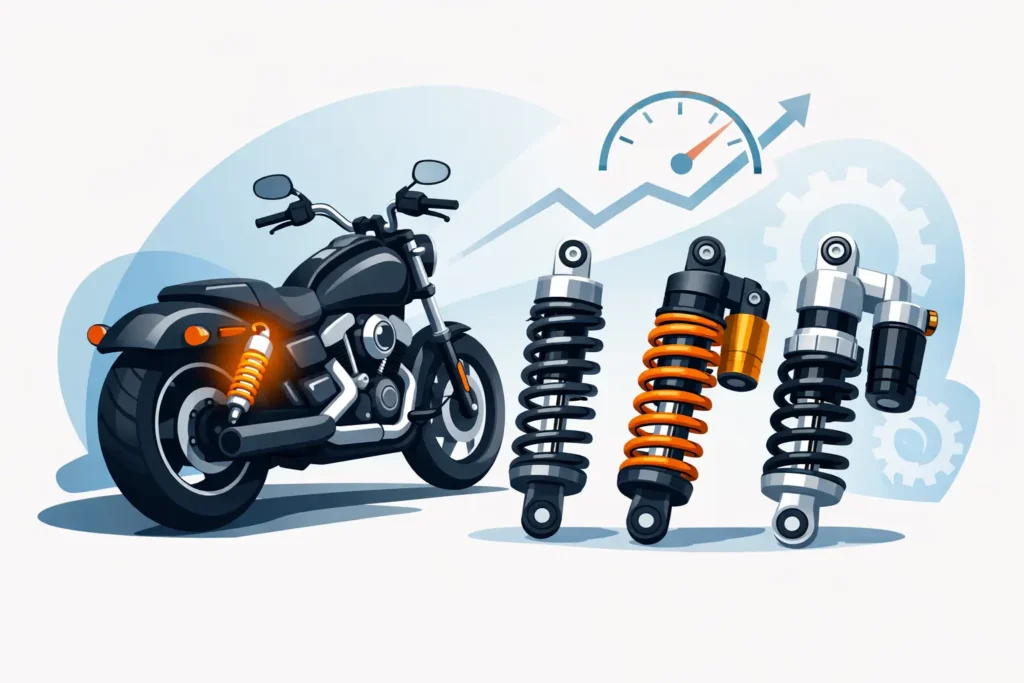
A Dyna can have all the motor you want, but worn-out shocks and soft fork springs will make it feel loose, harsh, and unsettled when the road gets fast or rough. The right Dyna suspension upgrade options do more than lower the bike or dress up the rear end. They help the tires stay planted, keep the chassis composed in corners, and let you ride harder without getting beat up. Mustang DayTripper Low Profile Seat Harley Dyna FXD Low Rider Street Bob 2006
For most riders, suspension work is the upgrade they wish they had done before exhaust, wheels, or another pile of bolt-on parts. The trick is choosing components that match your Dyna, your weight, your riding style, and the stance you want. A slammed bar-hopper, a two-up cruiser, and a canyon-running Low Rider should not get the same setup. Legend air ride suspension for harley Davidson
Start With What Your Dyna Is Doing Wrong
Before buying parts, pay attention to the bike on a ride you know well. If the rear end kicks hard over broken pavement, bottoms out with a passenger, or wallows through a long sweeper, the shocks are likely the first place to look. If the front dives too far under braking, feels vague mid-corner, or sends a sharp hit through the bars on small bumps, the forks need attention. dyna suspension upgrade options Home
Age matters as much as mileage. Factory suspension components can be tired after years of heat cycles and sitting, even if the odometer is not high. Leaking fork seals are obvious, but weak springs and worn damping are often overlooked because they fade slowly. Riders get used to the bike feeling bad until they ride one with fresh, correctly set-up suspension. Custom Handlebar Risers 1 1/2 Fat Bars Harley Chopper Softail Touring Dyna Sportster
Be honest about how the bike is used. A Dyna that sees Fresno streets, freeway miles, and weekend backroads needs a different compromise than a stripped-down custom that mainly cruises short distances. There is nothing wrong with choosing looks, but understand what you give up when you cut travel or fit ultra-short shocks.
Dyna Suspension Upgrade Options for the Rear
Rear shocks make the biggest immediate difference on many Dynas. They carry the rider, passenger, luggage, and a lot of the punishment from rough pavement. Better shocks use stronger springs and more controlled damping, which means the suspension moves when it needs to move rather than bouncing or slamming into the stops.
Stock-Length Performance Shocks
For a rider who wants better control without changing the silhouette of the bike, stock-length aftermarket shocks are usually the smart move. Look for units with preload adjustment at minimum. Preload lets you set ride height and sag for your body weight, then add support when you throw on bags or pick up a passenger. Black Harley FXD FLS Softail Dyna Chopper 18″ Ape Hanger 1.5″ Handlebars Knurled
Shocks with rebound adjustment offer another step up. Rebound controls how quickly the shock extends after a bump. Too little rebound damping can make the rear feel pogo-like. Too much can make it pack down over a series of bumps and ride harsh. Adjustable shocks give a rider room to tune instead of living with one factory compromise.
Longer Shocks for Ground Clearance and Control
A modest increase in shock length can wake up a Dyna that drags hard parts early in corners. More rear ride height can increase lean clearance and provide more usable wheel travel. It can also sharpen steering, which many aggressive riders like on a heavy Harley.
The trade-off is seat height and geometry. A taller rear end may make the bike feel quicker on turn-in, but it can also reduce flat-foot confidence at stops. Check belt clearance, fender clearance, exhaust clearance, and the side stand angle before committing. A bike with longer shocks may need matching attention at the front so it stays balanced rather than nose-low.
Lowered Shocks and Slammed Builds
Short shocks deliver the low stance that works on many custom Dynas, but they are not a free upgrade. Less shock length usually means less travel, and less travel means a greater chance of bottoming out on potholes, bridge joints, and two-up rides. Cheap short shocks can look right in the parking lot and feel brutal everywhere else.
If a low build is the goal, use the best quality short-travel shocks your budget allows and confirm spring rate for your load. A properly engineered lowered setup can be usable. It simply will not offer the same cornering clearance or rough-road comfort as a taller performance setup.
Build the Front End to Match
Replacing rear shocks while leaving tired fork internals alone can create an unbalanced bike. The front may now dive and wander while the rear feels planted. Fork work does not always require replacing the entire assembly. For many Dynas, springs, fresh oil, seals, and improved damping components deliver a serious improvement.
dyna suspension upgrade options for Fork Springs and Proper Spring Rate
Factory fork springs are built for broad appeal, not necessarily for a solo rider who brakes hard, runs taller bars, or carries extra weight. Progressive-rate springs can work well for general cruising because they start soft and add support deeper in the stroke. Straight-rate springs are often preferred by riders seeking more predictable, consistent behavior under aggressive braking and cornering.
The correct rate depends on rider weight, gear, riding pace, and how much load the bike carries. Do not pick springs based only on another rider’s recommendation. A 160-pound solo rider and a 240-pound rider with a windshield, saddlebags, and passenger need different support.
Damping Components, Cartridges, and Fork Oil
Fork damping controls the speed of fork movement. Better damping hardware can reduce brake dive without making the front end feel like a solid bar. Cartridge-style upgrades or performance damper assemblies are a major step up for riders who push their Dyna through corners and want more feedback from the front tire.
Fresh fork oil is part of every serious fork service. Oil weight affects damping, but heavier oil is not a cure for worn parts or incorrect springs. Using overly heavy oil to hide a weak setup can make the fork harsh on sharp bumps. Follow the component manufacturer’s recommendation, then tune carefully if adjustments are available. Chrome Handlebar Controls Clutch Brake Harley Softail Dyna Sportster Ironhorse
Keep Ride Height and Geometry in the Conversation
Suspension changes affect more than comfort. Raising or lowering one end changes rake, trail feel, ground clearance, and weight distribution. Raise the rear significantly while leaving the front untouched and the bike can steer faster. Lower the rear and slide the forks up too far, and you can lose clearance and create a front end that feels less settled at speed.
That does not mean every change needs a full chassis calculation. It means you should make deliberate changes, measure what you changed, and ride the bike before stacking another modification on top. On a Dyna, a balanced front-and-rear package nearly always works better than chasing a dramatic stance at one end.
Also check tire size. A taller or wider rear tire, different wheel, or changed front tire profile can influence ride height and clearance. Builders putting together custom wheels, swingarms, or wide-tire conversions need to view suspension as part of the whole package.
Confirm Dyna Fitment Before Ordering
Dyna production spans multiple generations, and fitment details matter. Fork diameter, brake configuration, axle and wheel setup, shock mounting hardware, fender clearance, and model-specific exhaust routing can all affect the parts that work. Do not assume a shock that fits one FXD model fits every Dyna without checking the details.
Measure your current eye-to-eye shock length with the bike safely supported. Verify the upper and lower mounting hardware, bushing size, and available clearance at full compression. On the front end, confirm the exact model year and fork configuration before ordering springs, seals, tubes, or damping kits. dyna suspension upgrade options
Used OEM parts can be a practical replacement when restoring a period-correct bike or repairing a clean rider on a budget. For performance, new springs and shocks are usually the better investment because their service history is known. Harley Warehouse carries a deep mix of used, OEM, aftermarket, and hard-to-find Harley components, so it is worth calling when your Dyna has an unusual front end, custom wheel setup, or a part that is not sitting in a standard catalog. 1 1/4 Black 12″ Riser T Bars Hanger Handlebars Harley Chopper Wheelie Dyna Sportster
Set It Up Before You Judge It
Installing quality suspension is only half the job. Set rear preload to achieve reasonable sag with you in riding gear on the bike. If you regularly ride two-up, note a second setting for that load. Start damping adjustments near the maker’s recommended baseline, then change one adjustment at a time on the same stretch of road.
Take notes. If the rear rebounds too quickly after a dip, add rebound damping in small steps. If it feels dead and harsh through repeated bumps, back it off. For forks, make sure tire pressure, steering-head bearings, wheel bearings, and brake components are in good shape before blaming the suspension for every handling issue. dyna suspension upgrade options
A well-sorted Dyna should feel planted without feeling stiff. It should brake with control, track through a rough corner without drama, and leave enough travel to handle real roads. Pick setup that fits the way you ride, set it up with care, and let the bike prove the difference mile after mile. http://harleydavidson.com