
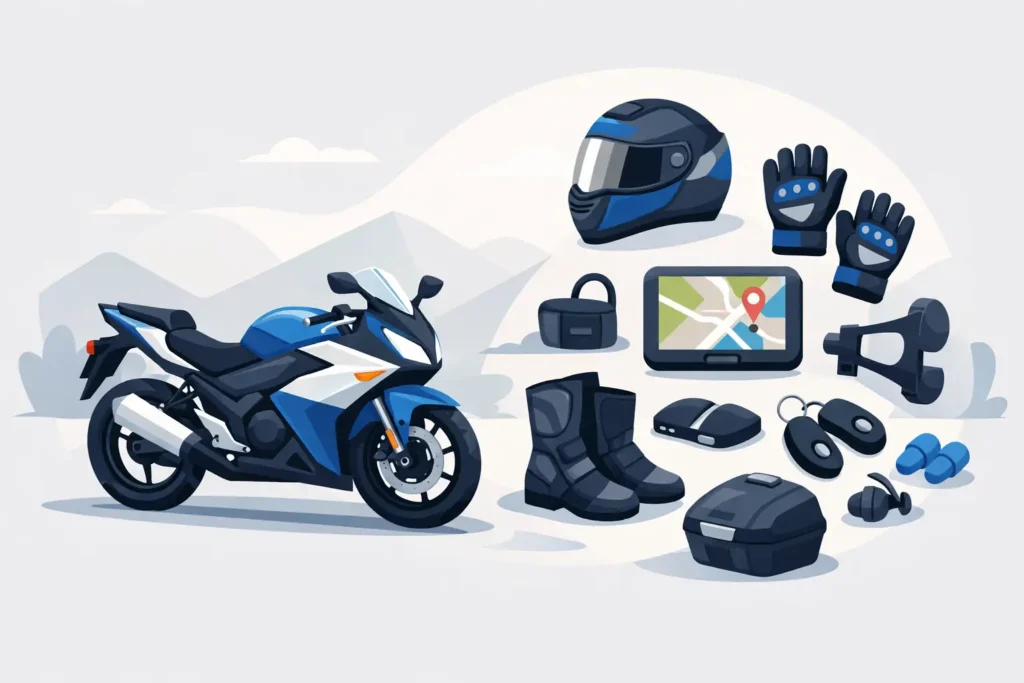
The first accessory you buy can either make every ride better or end up collecting dust in the garage. A loud exhaust, tall bars, and custom paint may be calling your name, but the smart answer to “what motorcycle accessories do I need” starts with how you actually ride. A weekend Dyna rider, a cross-state Road Glide rider, and a Shovelhead restoration guy need very different equipment. what motorcycle accessories do i need Home
Start with the stuff that keeps you safe, keeps the bike running, and keeps a minor problem from stranding you miles from home. Then spend on comfort, carrying capacity, performance, and the parts that give your machine its own attitude. Sportster Conversion Parts that fits
What Motorcycle Accessories Do I Need for Every Ride?
The essentials are not always the flashy parts, but they earn their place every time the wheels turn. Think in terms of rider protection, visibility, security, and basic roadside readiness.
Riding gear is not optional equipment
A properly fitted DOT-approved helmet is the first purchase if you do not already have one. Full-face helmets give the most weather and impact coverage, while a quality modular or three-quarter helmet can better match the open-road feel many cruiser riders want. The right choice depends on your comfort level, local conditions, and how much wind protection your bike provides.
Add a motorcycle jacket with real abrasion resistance, gloves that protect your palms and knuckles, over-the-ankle boots, and riding pants or reinforced denim. Fresno heat can make heavy gear feel like a burden, but pavement does not get softer in July. Look for ventilated gear for warm weather rather than skipping protection altogether.
Rain gear deserves a spot in the saddlebag even if your bike is mainly a fair-weather machine. A compact waterproof layer takes little room and can turn a cold, soaked ride into an inconvenience instead of a miserable day. what motorcycle accessories do i need Black set of spoke rims
A phone mount and charging setup are practical upgrades
Navigation, roadside help, and communication all live on your phone now. Use a secure, vibration-damped motorcycle phone mount made for handlebars or a fairing setup, not a bargain clamp that can let go on a rough railroad crossing. Pair it with a weather-resistant charging port connected correctly to the bike’s electrical system.
Do not let the screen become a distraction. Set your route before moving, keep notifications quiet, and pull over when you need to make changes. A phone mount is useful equipment, not an excuse to ride one-handed through traffic. what motorcycle accessories do i need 80 spokes dual disc front wheel
Security matters when the bike is parked
Harleys, choppers, and vintage motorcycles get attention everywhere – including from people who do not own them. A hardened disc lock, chain lock, or compact alarm is cheap insurance when you stop for food, park outside a hotel, or leave the bike on a trailer. A cover can add another layer of privacy by keeping expensive accessories and the exact model less visible.
No lock makes a motorcycle impossible to steal. The goal is to make your bike a harder, louder, slower target than the one beside it. For a valuable vintage piece or custom build, consider a tracker as well.
Carry Tools for the Bike You Actually Own
A universal roadside kit is better than nothing, but a Harley-specific kit is better. Your motorcycle may need SAE tools, Torx bits, specialty fasteners, or a particular socket size that a generic kit skips. Check your bike before packing up.
A useful compact kit includes a tire-pressure gauge, small air compressor or CO2 inflator, tire plug kit for tubeless tires, multi-bit driver, hex and Torx keys, electrical tape, zip ties, spare fuses, and a flashlight. Carry the wrench sizes that fit your battery terminals, seat hardware, handlebar controls, and common roadside adjustments. what motorcycle accessories do i need Saddlemen Roadsofa HC Honeycomb 2-Up Seat For Harley
If you run a carbureted Shovelhead, Evo, or older Sportster, a few extra items may make sense: spare plugs, a plug wrench, fuel line, and the basic tools needed to handle the problems that machine is known for. For late-model baggers, include fuses and know where the diagnostic connector and battery access points are located. The accessory is only useful if you know how to use it, so practice changing a fuse or checking tire pressure at home first.
Accessories That Make Longer Harley Rides Better
Once the safety and tool basics are covered, comfort upgrades can change how far and how often you ride. This is where the right parts depend heavily on your model, your height, and your mileage.
Wind protection reduces fatigue
A windshield, quick-detach windshield, fairing, or better windshield height can make freeway miles far less punishing. Wind hitting your chest wears you out. Wind hitting the top edge of a poorly sized windshield can create helmet buffeting that is just as annoying. Black Thunderheader Exhaust pipe
Before choosing one, consider your seating position and helmet. A tall rider on a Softail may need a different setup than a shorter rider on a Street Glide. Fairings offer more storage and weather protection, but they change the look and feel of the bike. A removable windshield gives a cruiser flexibility, though it will not provide the same coverage as a full bagger fairing.
Seats, bars, and foot controls must work together
A custom seat can be one of the best money-to-miles upgrades you make, especially if the stock saddle pushes you forward or creates pressure points after an hour. Do not buy based on looks alone. Seat height, width, foam density, and riding position all matter.
Handlebars, risers, grips, floorboards, pegs, and controls should be treated as one ergonomic system. Ape hangers may look right on a chopper, but they need to be set at a comfortable reach and with correct cable, brake-line, and wiring length. Forward controls can open up legroom for some riders, while mid-controls provide more leverage and a more active riding position. There is no universal best setup.
Suspension is often overlooked because it is less visible than chrome or pipes. Better shocks or fork components can improve control, comfort, and confidence over broken pavement. If your bike bottoms out with a passenger or feels loose in corners, suspension should move ahead of cosmetic upgrades.
Luggage and Passenger Accessories Worth Buying
If you use your motorcycle beyond short local rides, you need a place to carry gear. Saddlebags, a luggage rack, a sissy bar bag, tank bag, or tool roll can all work. The right setup comes down to your bike and what you carry.
Hard bags and locking lids are excellent for bagger riders who commute or tour. Soft throw-over bags can be a good fit for Sportsters, Dynas, and customs, but check clearance around shocks, wheels, exhaust, and turn signals. A tall sissy bar with a quality bag is simple, useful, and right at home on many Harley builds.
For two-up riding, a passenger backrest, proper passenger pegs or floorboards, and a seat built for a passenger will do more than any chrome accessory. Do not expect a small solo seat and temporary suction-cup pad to make a passenger comfortable for a long run.
Performance and Style Accessories: Buy With a Plan
Exhaust systems, intake kits, tuners, handlebars, wheels, lighting, and bodywork are where a bike starts becoming yours. They can also create fitment problems, tuning issues, and wasted money when bought in the wrong order.
If you want more power and a stronger throttle response, plan the intake, exhaust, and tuning together. An exhaust swap without the correct tune may not deliver the results you expect. Sound is personal, but excessively loud pipes can make long rides tiring and bring unwanted attention in town. what motorcycle accessories do i need Aquatic AV Bluetooth USB Stereo Sirius XM Satellite Radio For Harley Touring 1998-2013
LED lighting is a worthwhile upgrade when it improves your ability to see or be seen. Headlights, auxiliary lights, brighter brake lights, and turn signals can add real safety value. Check that the parts are compatible with your charging system and avoid wiring shortcuts that create trouble later.
For builders and restorers, fitment and era correctness are part of the job. An OEM take-off may be more valuable than a shiny reproduction part on the right restoration. A period-correct tank, swingarm, wheel spacer, fairing, or hardware can be the difference between a bike that merely looks old and one that tells the right story. Harley Warehouse carries the kind of new, used, OEM, NOS, and hard-to-find pieces that make those decisions possible.
Check Fitment Before You Spend
Harley parts are not interchangeable just because they are both labeled Harley-Davidson. Model year, frame family, engine platform, wheel size, brake setup, ABS, cable routing, and factory accessory packages can all affect fitment. A part that bolts onto a 2010 Street Glide may not work on a 2020 Road Glide, and a Dyna accessory may require fabrication to fit a Softail.
Before ordering, confirm the model, year, VIN details when needed, and the exact component already on the bike. Measure twice on vintage and custom machines, where previous owners may have changed almost everything. Used parts can be a great value, but condition matters too. Ask whether mounting hardware, brackets, spacers, or connectors are included.
Buy the accessories that support the ride you want to take next. Start with protection and reliability, then add the parts that make you want to take the long way home. http://harleydavidson.com