
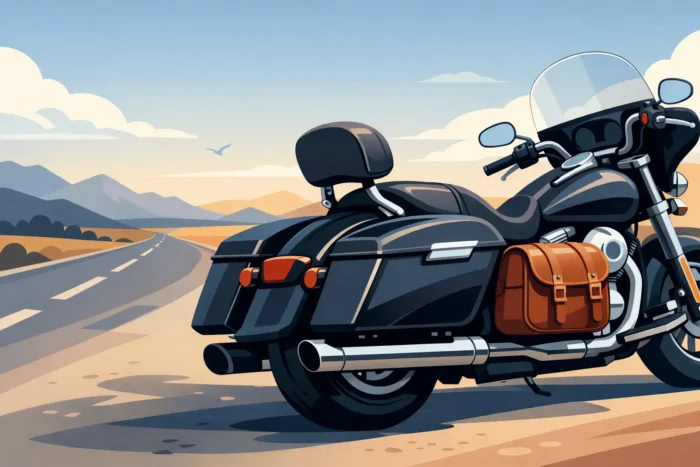
Harley saddle-bags
A saddlebag that looks right in the driveway can become a rattle trap, a heel catcher, or a soaked gear locker 200 miles from home. The right Harley saddlebags do more than carry rain gear and tools. They need to match the bike’s mounting points, exhaust layout, suspension travel, riding style, and the kind of miles you actually put down. Harley saddle-bags V-Twin 74 Panhead Engine
For a late-model bagger, that may mean color-matched hard bags with clean lids and dependable latches. For a stripped-down Dyna, Softail, Sportster, or old Shovelhead, a set of leather throw-overs or period-correct hard cases may fit the build better. There is no single best setup. There is only the setup that fits your bike and keeps your gear where it belongs. Harley saddle-bags chrome 13 inch progressive harley shocks
Harley Saddlebags Start With Fitment
Before choosing leather, fiberglass, ABS, or aluminum, identify exactly what you are mounting them to. Harley frames, fender struts, docking hardware, exhaust systems, and rear lighting arrangements vary widely by model and year. A bag that works on one FLH may not bolt directly onto another, even when both bikes wear touring frames. Harley saddle-bags 13 inch black progressive 412 shocks
Factory-style hard bags are usually the most straightforward route for Touring models such as Electra Glides, Road Kings, Street Glides, Road Glides, and Ultra Classics. These bikes were built around a saddlebag support system, rear guard hardware, and a specific relationship between the bags, mufflers, and passenger floorboards. OEM and quality replacement bags can provide a clean fit, but confirm the year range, hinge style, latch setup, lid shape, and mounting hole location before calling anything compatible. Harley saddle-bags OEM Frame 1948 Panhead Wishbone
Softails, Dynas, and Sportsters demand a closer look. Many use detachable or semi-rigid bags mounted to fender struts, support brackets, or quick-release hardware. Check whether the bike has relocated turn signals, a side-mounted plate, tall shocks, aftermarket exhaust, or a chopped rear fender. Any one of those changes can turn an easy saddlebag install into a fabrication job. Harley saddle-bags 2 Step saddlemen Seat Blue Diamond Stich
Vintage Harley fitment is its own category. Panhead, Knucklehead, Shovelhead, and early FLH owners often want the right silhouette and hardware for the era, not a universal bag hanging off a handmade bracket. That means paying attention to bag rails, guards, hinges, reflectors, trim, and mounting plates. Period-correct parts are worth the hunt when the goal is a real restoration or an old-school build that does not look cobbled together. Harley saddle-bags Mustang Vintage solo Seat Harley
Measure the Trouble Spots First
You do not need a machine shop to avoid most saddlebag problems. Measure the space from the rear fender strut to the exhaust, from the axle area to the bottom of the bag, and from the bag location to the rear shock or swingarm. Then account for suspension compression. A bag that clears the tire while the bike is on the lift may not clear it when you hit a pothole with a passenger aboard. Harley saddle-bags Progressive Airtail Shocks Harley Softail 89-99 Custom Ironhorse Heritage Fatboy
Also check rider clearance. On some setups, oversized bags interfere with a passenger’s feet, crowd rear pegs, or make it awkward to reach a kickstand. On others, the bag lid opens directly into a sissy bar, luggage rack, or backrest. These are small details until the first gas stop on a loaded trip. Harley saddle-bags OEM Vivid Black Saddlebags Harley Touring FLH Ultra Classic road King glide 93-13
Hard Bags or Leather Bags?
Hard saddlebags earn their place on long-haul baggers and daily riders because they hold shape, lock up, and handle weather better than most soft luggage. They also give a bike that classic full-dresser profile. If you commute, travel, or leave a helmet and riding gear parked with the bike, locking hard bags make practical sense. Harley saddle-bags Ultima 6-speed Polished Transmission Harley Softail Fxst Heritage Chopper 90-99
The trade-off is weight, cost, and damage risk. A cracked lid, broken hinge, worn latch, or missing mounting plate can turn a bargain hard bag into a project. Painted bags add another layer. A close-looking black may not match your factory black in direct sunlight, and used paint can hide repairs beneath decals or pinstriping. If you are building a rider rather than a show bike, a solid used set in the wrong color can still be a smart buy. Paint can come later. Harley saddle-bags Customize Black/Chrome Mag rims and tires
Leather bags bring a different kind of utility. They suit bobbers, choppers, Dynas, Softails, Sportsters, and vintage machines where a large molded bag would look out of place. Quality leather has character, can be repaired, and works especially well for tools, a jacket, gloves, and a small load of roadside gear. Harley saddle-bags batwing fairing mount kit for vt750 shadow phantom black
But leather needs care. It can dry out, sag, mildew, and absorb water if neglected. Throw-over bags are simple to install, though they can rub paint and shift if they are not tied down properly. Bracket-mounted leather bags hold their line better, but the brackets must be strong and positioned clear of the wheel and exhaust. A set of cheap bags flapping beside a hot exhaust is not a custom look. It is a bad day waiting to happen. Harley saddle-bags black TBR Harley exhaust for sale
Semi-rigid and synthetic bags land between the two. They are often lighter than hard bags, more weather-resistant than traditional leather, and easier to remove. They can be a good answer for riders who want storage on weekend runs without committing to a permanent bagger setup. Just do not assume “universal” means bolt-on. Universal usually means you supply the planning. Harley saddle-bags 55mm Cable Driven Throttle Body – HPI-55D1-18B
Used Harley saddle-bags Can Be a Strong Buy
Used Harley parts make sense when the condition is honest and the fitment is right. Saddlebags are a great example. A factory bag with cosmetic scuffs, solid hinges, complete latches, and good mounting hardware may be more valuable on the road than a shiny bargain replacement with weak hardware.
Inspect hard bags closely at the corners, lid edges, hinge mounts, and lower mounting points. Look inside, not just outside. Water stains, loose fasteners, separation around mounting holes, and warped lids tell you how the bags lived. Open and close each lid several times. Latches should engage cleanly, hinges should not bind, and a lid should sit evenly against its seal.
For leather, look for dry cracking, damaged stitching, soft bottoms, missing buckles, and distorted mounting areas. Surface scuffs are normal. Structural rot is not. Smell matters, too. A heavy mildew odor can be difficult to remove and usually points to long-term moisture exposure.
Do not overlook the hardware. Missing bag supports, brackets, lock sets, latch receivers, keys, reflectors, trim, or mounting bolts can add up fast. Sometimes the rare item is not the bag shell. It is the correct hinge, period lid, bracket, or OEM hardware that finishes the installation.
Pack for the Bike You Ride
Capacity is easy to overestimate. A large pair of bags can encourage riders to overload the rear of the bike with tools, bottles, spare parts, and gear they will never use. Extra weight behind the axle affects handling, particularly on lighter bikes and machines with tired shocks.
Pack heavy items low and evenly from side to side. Keep emergency tools, a tire repair kit, and rain gear accessible. If you carry oil, fuel bottles, or other fluids, seal them in a secondary bag. Nobody wants a quart of oil leaking into a saddlebag full of gloves and paperwork.
For touring riders, hard bags are rarely the whole storage plan. A luggage rack, tour pack, or roll bag may handle bulkier gear, while saddlebags carry the items you need at every stop. For a stripped-down cruiser, smaller bags often work better because they preserve the bike’s lines and keep weight under control.
Make the Mounting Worth Trusting
A saddlebag system is only as good as the brackets and fasteners holding it on. Use the correct supports where possible, install all required fasteners, and use threadlocker where the application calls for it. Do not rely on a single bolt, a loose fender-strut clamp, or a few zip ties to hold loaded bags at highway speed.
After installation, check clearance with the rear suspension compressed if possible. Then ride a short loop and inspect everything again. Look for witness marks near the tire, belt, shocks, exhaust, turn signals, and axle. Recheck the mounting hardware after the first few rides, especially on a rigid-mount setup or an older bike that vibrates like it has something to prove.
At Harley Warehouse, the inventory runs from modern bagger components to used OEM pieces and hard-to-find vintage hardware, which matters when a saddlebag project needs more than a pair of bags. Sometimes the missing bracket, latch, rail, or correct-era mounting part is what gets the bike back on the road.
Buy the bags that match the miles ahead, not just the photo in your head. When the fit is right, the mounts are solid, and the gear stays dry, you can load up, kick it into gear, and let the ride run long. brembo brake calipers