
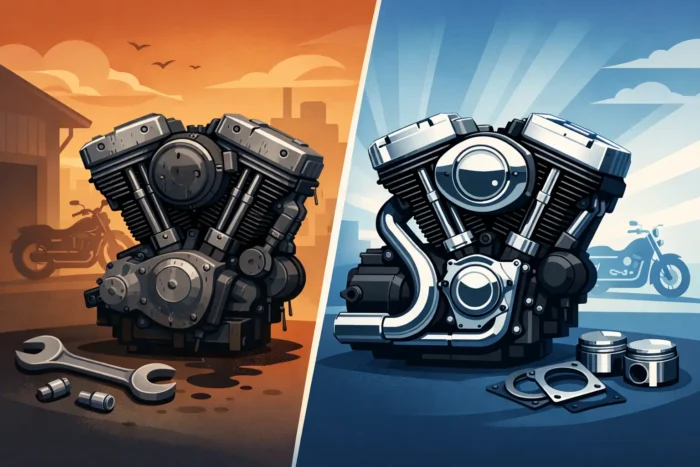
A tired Evo that smokes at every stoplight, a Twin Cam with a bad bottom end, or a Shovelhead project missing its heart puts you at the same crossroads: used versus new Harley engines. The right answer is not always the newest engine you can afford. It is the engine that fits your frame, electronics, riding plans, budget, and willingness to turn wrenches.
For some riders, a fresh crate motor is the fast lane back to dependable miles. For a builder chasing period-correct character or working with a hard-to-find chassis, a clean used OEM engine can be the better score. Know what you are buying before you commit, because an engine deal can either keep your ride roaring or turn into a very expensive pile of parts.
Used Versus New Harley Engines: Start With the Build
Before comparing prices, get specific about the motorcycle. A late-model Touring engine, for example, is not a drop-in replacement for every FLH chassis. Motor mounts, transmission compatibility, exhaust routing, intake setup, oiling, charging system, throttle controls, CAN bus electronics, and title or VIN requirements can all affect the job.
A new engine generally makes the most sense when your goal is reliable, frequent riding and you want a known starting point. That could mean a daily cruiser, a long-distance bagger, or a performance build where you need a clear horsepower plan. New aftermarket or replacement engines also give you the chance to choose displacement and components around how you ride instead of inheriting somebody else’s decisions.
Used engines shine when fitment and authenticity matter most. A correct-number-era Shovelhead, Ironhead Sportster, Panhead, or early Evolution engine carries a look and mechanical personality that a modern replacement cannot duplicate. For a restoration, period chopper, or classic rider, used OEM can be exactly what the build calls for.
The key is separating a good used engine from a cheap unknown engine. Those are not the same thing.
What You Get With a New Harley Engine
The biggest advantage of new is certainty. You know the bore, internal components, and assembly condition from day one. If the engine comes from a reputable builder or manufacturer, you also have documented specifications and some form of warranty coverage. That matters when you are paying a shop for installation or investing in a full build around the motor.
New powerplants are a strong choice for riders who want to minimize downtime. You still need proper break-in, tuning, heat cycles, fluid changes, and regular maintenance, but you are not starting with hidden wear in the crank, cases, valve train, or oil pump. You can also build around the engine correctly from the start – matched ignition, carburetor or fuel injection, intake, exhaust, clutch, and cooling upgrades.
There is another advantage for performance-minded riders. A new engine can be selected to match the goal instead of forced into one. If you want more torque for loaded highway miles, a stock-style replacement may be the smart move. If you want a hard-pulling hot rod, you can choose a package designed for that kind of riding. Bigger is not automatically better, though. More cubic inches can mean more heat, more stress on the clutch and drivetrain, more tuning work, and a different feel than you expected.
The downside is simple: cost. A new engine is only part of the bill. Plan for installation hardware, gaskets, oil lines, exhaust and intake compatibility, tuning, labor if you are not doing the work yourself, and possibly upgrades to the transmission or clutch. A new engine can be the clean solution, but it is rarely the cheap solution.
Why a Used Engine Can Be the Right Call
A used Harley engine can put a running motor within reach for a fraction of the cost of a new replacement. It can also save a machine that would otherwise sit because the correct engine is no longer available new. For garage builders, independent shops, and riders keeping an older Harley alive, that is a big deal.
OEM used engines also bring factory fitment. When you find the correct model-year unit, the mounting points, case design, sensor locations, and factory dimensions are usually far easier to work with than adapting an engine from another platform. That does not mean every used engine is plug-and-play. Harley changed details across years, and prior owners may have swapped cams, heads, ignition parts, charging systems, or cases. Verify the actual engine, not just the seller’s description.
A used engine can also be a smart foundation for a rebuild. If the cases are sound and the major pieces are present, you can rebuild it to your standards while preserving the correct platform. This is especially worthwhile for vintage machines where matching the era matters as much as making horsepower.
But used means history matters. A motor pulled from a low-mile wreck may be an excellent buy. A motor that has changed hands three times, has no paperwork, and cannot be turned over is a gamble. Sometimes the price reflects a minor repair. Sometimes it reflects a bottom end that is ready to come apart.
Questions to Ask Before Buying Used
Ask why the engine was removed and whether the motorcycle ran before removal. Find out the approximate mileage, model year, engine code, and whether it was stock or modified. Photos should show both sides of the cases, cylinder fins, mounting tabs, engine numbers where appropriate, sensors, covers, and any visible damage.
If possible, confirm whether the engine turns freely by hand and inspect the oil. Metal in the oil, a burned smell, damaged drain plugs, cracked cases, broken fins, stripped threads, or sloppy wiring are warning signs. On an engine you can hear run, listen for lower-end knock, excessive top-end noise, smoke, oil leaks, hard starting, and poor idle. A compression or leak-down test adds useful information, but it does not reveal everything about the crank assembly or oil system.
Do not overlook what is missing. A used long block without throttle body, injectors, carburetor, stator, regulator, ignition, covers, sensors, or oiling components may still be a fair deal, but price it honestly. Chasing small missing parts can eat up the savings fast.
Fitment Is More Than Engine Mounts
The engine may physically fit the frame and still create a long list of problems. Carbureted and fuel-injected setups have different needs. Late-model engines can require matching modules, wiring harnesses, gauges, security components, throttle controls, and programmed electronics. A donor motor with its complete supporting system is often easier to install than a bare engine that looked cheaper at first.
Transmission compatibility deserves the same attention. Check the primary, starter arrangement, clutch, sprocket or pulley alignment, and final-drive setup. On older machines, you may be dealing with kicker versus electric-start arrangements, generator versus alternator systems, or custom frame clearances. Builders working on rigid choppers and vintage customs know that an inch in the wrong place can turn a weekend job into fabrication season.
For any engine swap, write down the exact year and model of the bike, the engine’s year and model, and the parts included. Then compare every connection point before money changes hands. That notebook is worth more than a vague promise that it “came out of a Harley.”
Budget for the Engine You Can Finish
The best deal is not always the lowest engine price. A used engine that needs a top-end refresh, seals, charging parts, ignition pieces, and tuning may cost as much as a better documented motor by the time it runs right. On the other hand, buying new when the rest of the bike needs brakes, tires, suspension, wiring, and transmission work can leave the build stalled halfway through.
Build a real number that includes the engine, freight or pickup, fluids, gaskets, installation parts, tuning, and a reserve for surprises. For a used engine, set aside money for inspection and preventive service even if it appears healthy. Replacing accessible seals, checking charging components, and servicing the oil system before installation is far easier than tearing the bike back down after the first ride.
If you are sourcing an older or unusual Harley engine, condition and completeness often matter more than mileage claims. A well-kept, complete OEM unit with honest photos and a clear history is usually worth more than a mystery motor with a low number on a handwritten tag.
Choose the Engine That Matches the Miles Ahead
Buy new when you want documented internals, warranty support, modern performance options, and the shortest route to dependable riding. Buy used when the right OEM engine, vintage character, budget savings, or restoration fitment gives your project a better path forward. Either way, inspect hard, confirm compatibility, and never let excitement replace the basic checks.
Harley Warehouse carries the kind of used, OEM, vintage, and hard-to-find motorcycle inventory that builders search for when the usual catalog answer will not do. If your project needs a specific-era engine or the pieces around it, bring the year, model, and fitment details to the conversation. The right motor is not just a purchase – it is what gets that bike off the stand and back where it belongs: out on the road.