
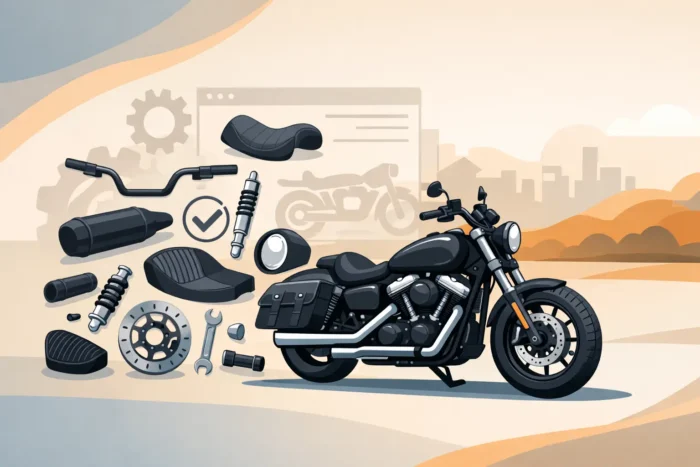
Harley fitment guide
A part can look right in a photo, carry a familiar Harley part number, and still be wrong for your bike. That is where a solid Harley fitment guide earns its keep. Whether you are replacing a damaged floorboard bracket on a late-model bagger, building a Dyna, or chasing an OEM piece for a Shovelhead restoration, fitment is more than matching a model name. black TBR Harley exhaust for sale
Harley-Davidson has built motorcycles around familiar names for decades, but frames, engines, electronics, wheel sizes, brake systems, mounts, and controls have changed along the way. Get the details right before you buy, and your project stays moving. Guess, and a simple install can turn into a pile of return shipping, drilled holes, and parts that almost fit. Harley fitment guide SEDICI Chicane 2 One-Piece Race Suit
Start With the Full Motorcycle ID
“Fits Harley” is not enough information. Start with the year, exact model, and platform. A 2006 FXD Dyna Super Glide and a 2016 FXDB Street Bob are both Dynas, but they do not share every mounting point, control setup, or electrical component. The same goes for Sportsters, Softails, Touring models, and Trikes.
Write down the information before shopping: model year, full model designation, engine size, transmission type if relevant, and any major modifications already on the bike. Your VIN can help confirm the original model, but remember that a 20-year-old Harley may have swapped wheels, aftermarket controls, a different front end, custom tins, or an upgraded engine.
For used and vintage parts, compare what is physically on the motorcycle to the part you need. The original factory configuration matters, but the current configuration matters more when somebody has been building on the bike for years. Harley fitment guide 30 inch King Spoke front wheel
Harley Fitment Guide: Know the Platform Breaks
The biggest fitment mistakes happen when riders focus on a model badge instead of the platform underneath it. Harley production changes can be major even when the bike name stays the same. Components of a Motorcycle Engine: Complete Guide for Beginners
Touring bikes and baggers
Touring fitment is especially detail-driven. A Road King, Street Glide, Road Glide, Electra Glide, and Ultra may share certain parts within a generation, but fairings, fork-mounted versus frame-mounted setups, saddlebag hardware, lighting, infotainment, exhaust routing, and seat mounting can be different.
For example, Road Glide-specific fairing and windshield parts are not interchangeable with Street Glide parts just because both are baggers. ABS versus non-ABS models can also change brake component fitment. Wheel diameter and front axle size need to be confirmed before ordering rotors, spacers, fenders, or a complete front wheel. Harley fitment guide Chrome spokes wheels and white walls tires
Dyna, Softail, and FXR builds
These are popular platforms for riders who want to personalize everything. They are also full of year-specific details. Dyna swingarms, rear fenders, seats, battery boxes, exhaust brackets, and control components can vary by year and submodel. Softails bring their own frame and suspension layouts, so a part intended for a Dyna is rarely a safe assumption on a Softail.
FXR owners know the drill: good used pieces can be hard to find, and the right part may be worth the hunt. Verify mounting tabs, bolt spacing, brake-side location, and whether a component was designed for a stock frame or an aftermarket setup. Harley fitment guide Engine guard for 2014 to 2026 super glide Harley
Sportsters and vintage Harleys
Sportsters are often called easy to build because there are so many parts around. That is true until you mix eras. Ironhead and Evolution Sportster parts do not automatically cross over, and even Evolution Sportsters saw changes to tanks, seats, ignition, wheels, brakes, and mounting systems.
Vintage Harley fitment demands even more patience. Panhead, Knucklehead, Flathead, and Shovelhead components may be OEM, reproduction, NOS, modified, or pulled from a custom build. A period-correct part can be exactly what a restoration needs, but it may require the correct companion hardware, brackets, or year-specific fasteners to install properly.
Harley fitment guide Measure the Parts That Matter
When product descriptions include dimensions, use them. When they do not, measuring your bike is the smart move. A tape measure is useful, but calipers, thread gauges, and a clear photo of the mounting area save even more trouble.
Pay close attention to axle diameter, wheel bearing size, rotor bolt pattern, pulley or sprocket offset, fork tube diameter, handlebar diameter, riser bolt spacing, and mounting-hole center-to-center measurements. These are the details that determine whether a part bolts on or becomes a fabrication project.
With handlebars and controls, do not stop at bar diameter. Check whether the bars are dimpled for internal wiring, drilled for electronic throttle-by-wire wiring, or compatible with your switch housings, master cylinder, clutch perch, and cable lengths. Taller bars may fit the risers but still require longer brake lines, throttle cables, clutch cables, or wiring extensions. Harley fitment guide Mustang Wide Tripper Diamond Passenger Seat For Harley
Engine Family Does Not Guarantee Fitment
A Twin Cam part may fit many Twin Cam motorcycles, but not every Twin Cam motorcycle. The same is true for Milwaukee-Eight, Evolution, and Shovelhead parts. Engine family is a starting point, not a final answer.
Exhaust is a good example. Header routing, oxygen sensor bungs, floorboard clearance, forward-control clearance, saddlebag clearance, and transmission mounting can all change the answer. A pipe that fits a Dyna might interfere with a Softail frame or miss the mounting location on a Touring chassis.
Air cleaners, cam covers, primary components, charging systems, and ignition parts also deserve a closer look. Confirm the engine generation, the stock or aftermarket configuration, and whether the part is intended for carbureted or fuel-injected use. On late-model motorcycles, check electronic compatibility before buying anything tied to sensors, gauges, lighting, or ride controls. Harley fitment guide Black Thunderheader Exhaust pipe
Used, OEM, NOS, and Aftermarket Parts Need Different Questions
OEM parts are often the easiest place to start because factory numbers and original applications give you a reliable baseline. Still, an OEM part can have a limited year range or be superseded by a later number. Match the part number where possible, then compare photos and dimensions.
NOS parts are valuable because they are genuine period inventory, but old stock does not mean universal fitment. The box may fit a specific year range, and the part may have spent decades on a shelf. Inspect condition, finish, rubber components, threads, and included hardware before planning an install.
Used Harley parts offer real value, especially on discontinued models and vintage projects. Condition and completeness matter just as much as fitment. A used fender may fit your year range but come from a bike with different light holes, trim mounts, or paint damage. A used fork assembly may require a different axle, brake caliper, or neck-bearing setup than the one currently on your bike.
Aftermarket components can open up a build, but read the fitment language carefully. “Universal” usually means it may require measuring, adapters, fabrication, or custom wiring. That is not a bad thing if you are building a chopper or custom, but it is a different purchase than a direct replacement part. Harley fitment guide 21 inch front spoke wheel and Tyre
Check the Whole System Before You Order
The part you are replacing often connects to several other parts. A wheel change can affect rotors, bearings, axle spacers, fender clearance, tire size, speedometer function, and brake alignment. A seat swap may depend on the tank style, rear fender, solo-seat spring kit, and mounting tab location.
Before buying, ask what else has to match. If you are installing forward controls, consider exhaust clearance and master-cylinder compatibility. If you are converting a front end, confirm the trees, stem length, neck bearings, wheel, axle, caliper mounts, and brake line setup. If you are changing a gas tank, inspect tunnel width, petcock location, fuel injection needs, dash mounting, and seat fit.
This is where builders save money by planning the system rather than shopping one shiny part at a time. Harley fitment guide WHEEL SPACERS +2.5 CM EPI 4/110 10X1.
When to Call Before Buying
Call when a listing says it fits a range but your bike sits near a production change. Call when the motorcycle has custom work, swapped components, or unknown history. Call when you need a rare bracket, a vintage factory piece, or a used assembly that may need matching hardware.
A clear description of the bike plus a few photos of the mounting area can answer questions a year-and-model search cannot. Harley Warehouse carries deep inventory across modern, used, OEM, NOS, and vintage parts, and not every piece in the warehouse is represented by an online listing. For uncommon builds, direct contact can be the fastest route to the right component.
The best part is not always the newest or the most expensive one. It is the part that matches your motorcycle, your build plan, and the work you are prepared to do. Confirm the details, keep your measurements handy, and get your ride back where it belongs – on the road. Harley fitment guide Springer Front End